Category Archives: Photography

Five selfie images, taken with both phone and pro cameras.

Pro camera v phone camera – what’s the difference?

Why does it take me so many attempts to get a good selfie? Pro camera v phone camera – what’s the difference?

Selfie, after selfie, after selfie… you take several, to finally get one you think will be just about ok – sound familiar? Have you ever considered the different results between a pro camera and a phone camera?

It’s an observation I hear frequently.

‘But we all have the cameras on our phones so I can do my own headshots can’t I?’…

Now before you switch off, I’m NOT going to get technical, although the differences are all technical. I’m going to show you comparisons and why it makes a difference to the way you view your own image.

As always, I often refer to related content in a previous blog, take a read, it may help: Using Phone cameras and filters.

The following two images were taken in the same spot, same angle, minutes apart, very similar ratio crop, no retouching:

The first was taken on an phone camera – The second taken on my professional camera:

Selfie image, full on to the camera, no re-touching.

Selfie image, taken on a phone, illustrating distortion.

Selfie image, taken on a professional camera, no-retouching.

A selfie image, taken with a professional DSLR camera.


Firstly, let me point out the distortion on my facial features, which is pretty obvious as you can see. The image taken on my pro camera is far more representative of who I am and what I look like.

I promised I wouldn’t get technical … but these are all technical issues and if you want to know more on that, please get in touch.

Secondly, the colour representation. In fairness to our phone cameras, (especially the newer models) they can do a pretty good job. However, that’s often when there is plenty of natural daylight. The jumper colour is really accurate with my pro camera.

Thirdly, the light level. Although there was reasonably good ambient light, I didn’t have a good source of natural daylight directly on my face. You can see the difference in how the two cameras managed it.

The following two images were again taken in the same spot, same angle, minutes apart, very similar ratio crop, no retouching:

The first was taken on an iPhone – The second taken on my professional camera:
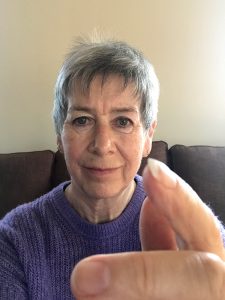
Selfie image, with part of my hand in view.

This is a second illustration of phone camera distortion.
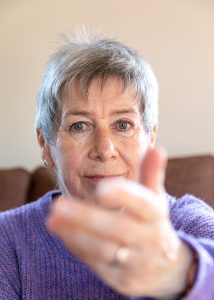
Selfie taken on a professional camera with part of my hand visible in front.

Selfie on a professional DSLR camera comparison.


This illustrates the distortion again. While I was holding my hand the same distance from the lens, my fingers are clearly much larger in the first image. Again, the colour representation and light levels differ too.

The following two images are a little older, both taken with a phone camera, a little further away from the lens.

You can still see some distortion in these, but as they are further away from the camera, it’s less obvious.
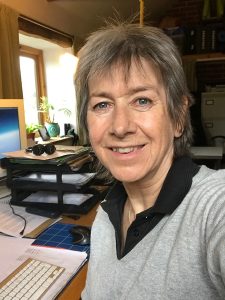
Selfie taken at arms length.

Selfie taken at arms length with slightly less distortion.

Selfie taken further away.

This selfie taken at arms length illustrates slightly less distortion.

What’s this comparison got to do with how we see ourselves?

I may have mentioned this before, but it’s worth covering again. One of the first things that can cause us to question or dislike an image of ourselves is ‘unfamiliarity’. We are used to seeing ourselves in the mirror. However, when we see a  photograph, it’s the other way round, which is how everyone else sees us. We may all think our faces are symmetrical, but we’re not. So slight differences on each side of our face are reversed. Add to this additional unflattering distortion as shown above, potential for poor lighting, wrong angle, and it’s no wonder people keep trying to take selfies unsuccessfully.

Pro camera v phone camera – what’s the difference?

In conclusion, you can clearly see quite a difference between phone camera images and those taken on a professional DSLR. So working with a professional photographer, is not just about their knowledge of how to get the best from you. It’s the type of camera they are using too.

Both the following help sessions are good starters for you to understand more about the images you have and why you might not be so keen on them, especially if they were taken on a phone camera:

https://loveyourimage.co.uk/review-your-image/

https://loveyourimage.co.uk/explore-your-image/

Did you know Love Your Image is on LinkedIn?

*****************************************


Woman wearing a suit of armour

Is judgement human nature or a choice?

Is judgement human nature or a choice?

Sticks and stones can break my bones but words will never hurt me… or do they …? Cue the suit of armour!

We all do it, but we hate when it’s done to us.

Judgement is everywhere – we all have opinions on a lot of things throughout our lives.

Unless you’ve had a particular incident that you can relate back to, a fear of being judged is one of the biggest contributors for a dislike of being photographed.

It’s a frequent observation when meeting and working with new people in front of a camera. The apprehension and anxiety is visible. Until they realise there is no judgement or expectation for them to be anything else but themselves.

This ties in with the last blog regarding the values and expectations we learn from birth. It’s taken me years of my life to understand this. I work on changing things when I consider necessary, in my efforts to be a better human being… there, I’ve just made a judgement upon my own life.

Let’s look at what judgement or, to judge means.

We all have opinions on things – so is it when we share or verbalise an opinion that it becomes a judgement? That may depend on whether it’s referring to a fact, or, judgement being passed, as in a court of law. When it comes to speaking/posting a personal opinion about someone/group of people, are we aware of the impact it could have on their life?

The one thing you can be sure of… if you judge others, you in return will be judged.

Yes we have far more freedom of speech in the UK than some other countries. So perhaps some see it as their right to pass judgement? However, it doesn’t change universal law that what you give out, you will get back.

  • Have you ever considered reducing the amount you judge?
  • Refrain from verbalising an opinion a little more often?
  • Would it make you a happier person?
  • Would it change the dynamics of your relationships with others?

Who are we to pass comment on someone when we perhaps know little about them, or their life. Or how their day was panning out when you crossed paths with them? Is judgement only considered negatively, or can you have positive judgement?

All points to consider.

To change this in ourselves, we first need to understand why we do it.

Many of us live a life of comparison and trying to be what others expect, for fear of being judged. It’s born out of wanting to be accepted, liked, loved and to fit in. It takes, a lot of learning, self assurance, confidence and belief in yourself to feel comfortable NOT to do this. Reading that back, I’m thinking “Why would we do that to ourselves?” But we do.

How do we deal with judgement and what can we do about it?

We may not have control of what people say to us. But we definitely have control and choice of how think and behave when it’s dished out!

When we receive judgement, our initial reaction can be one of upset and hurt. You may feel you want to hit back and defend yourself. Please remember to keep this in context of a particular situation. But you can learn to realise, things people say, speaks much more about them, than it does about you. Judgement from one person, may be a compliment from another, according to their opinion. How many times have you heard an opinion being voiced? But it wasn’t asked for and was fairly obviously unnecessary.

It’s a challenge to keep our opinions to ourselves when others have been judgemental to us. Very often, it’s said in jest, or it can be followed up with “I was only joking”. If you’ve been following my blogs, I refer to an example I shared in Photographer Responsibility – part 2.

There is strength and power in knowing when to stay silent and when to respond.

Very often things others say stay with us, cause us to doubt ourselves, and question what we do and who we are. This is something some people will have endured for many years. It can cover all sorts of things, in every area of our lives. How we behave – even expectations in what we look like in our dress and style. It’s often most difficult to deal with if we are tired or feeling a little low.

What positive can come out of this? An individuals unique personality will always want to break through and be itself. You can start your journey of change to become who you want to be.
*** Awareness of ourselves is key to helping you on that path.

Being stronger to deal with judgement starts with ourselves.

Be kinder to yourself and stop giving yourself a hard time, it’s not a sign of weakness or giving in. If you feel you’ve made errors in the past, you were simply doing your best at the time. Judging others less will also reap its rewards.

So in answer to my original heading question. Is judgement human nature or a choice? I believe it’s a mix of both. Yes it’s part of human nature, but you do have a choice and can learn to deal with it. Start changing some lifetime habits. As I mentioned previously, it is essential for someone to feel they can be themselves when being photographed, without fear of being judged.

A date for your diaries 🙂 – this blog ties in perfectly with the event.

*** I will be one of the panelists at the ‘BE YOU’ event on April 28th 2023 in Bury St Edmunds at The Athenaeum. It’s all about driving change through conversation and support, to help you BE YOU. Do book your ticket and come along :).

Don’t forget, you can follow me on social media channels and check out and subscribe to the Love Your Image You Tube channel.

***********************************

Five different images of life as we know it.

Culture shock photography!

Does the culture and society we live in affect our attitude towards being photographed?

Does the culture and society we live in affect our attitude towards being photographed? Here in the UK, we live in what is considered a modern civilised society. We are a developed country, as like Europe, Canada, North America, Australia, New Zealand. But the world is ever more multicultural, and effects of our society filter through to other countries and cultures. Made ever easier with the growth of the internet, mobile phones and social media connectivity.

One thing that is certain, culture, fashion, image, beauty, styles, all evolve and change over the centuries. In my opinion one of the things that can drive change and evolution in a culture is money. Whether it’s a lack of it, or lots of it. Innovation is and can be great for the world population. Although as mankind has discovered that can come at a cost when misused.

But what’s all this got to do with getting in front of a camera?

Well the culture we are born into and grow up in is going to have a profound effect on our learning and development. Yes it’s also got a lot to do with those closest to us. If they’ve grown up in the same environment, a lot of expectations and beliefs can be very similar.

Now we are getting closer to the point…

Part of our belief system that we learn and develop from when we are children, comes from the society we are born into. Our youngsters haven’t experienced a world where the internet and computers, including mobile devices didn’t exist.

Each generation can be heard to say “when I was young, we didn’t have (this that or the other) … “. You’ve only got to search YouTube for Monty Python’s Yorkshireman sketch if you fancy a real giggle on this.

But somewhere in the world there are children who live without access to clean water. Have nothing more than the clothes they stand in, let alone a TV or a mobile phone.

This blog is not about the right and wrong of these things. It’s to highlight the beliefs we form, including that of ourselves, according to the world we are raised in.

Somewhere in the world all these things have been and are considered beautiful and attractive:

  • Large in size
  • Tooth sharpening
  • Lip and neck stretching
  • Flawless skin
  • Small feet
  • Pale skin
  • Dark skin

In our world, we can easily see ourselves. We have mirrors. We have phones and cameras with which we can capture pictures. As a two year old, you may have discovered yourself in a mirror, and kissed your reflection. When was the last time you were able to look in a mirror, and genuinely love what you see?

Nowadays, we have ‘trendsetters’ and ‘influencers’ on platforms like Instagram and TikTok.

Copying a style has become normal. The pressure to confirm and be like others in our peer groups is HUGE.Reality TV produce series in the name of ‘entertainment’ that further highlight current ‘trends’. It’s invisible in its normality as an accepted part of our daily life… until it causes us problems. The term ‘reality TV’ itself I find questionable. Does it really reflect real life and real people? Trendsetters and influencers can be an inspiration to many and be a positive thing in lots of ways. However, it’s the expectations we put on ourselves, to be like this that or the other that I find unsettling.

Some people lives their lives by others benchmarks.

I’ve always wanted to encourage people to be their own person and to learn to love who they are.

For those who don’t like being photographed or seeing the results, it can have evolved from the belief system they developed in the society they grew up in. This would include how they see themselves – not something you would necessarily be aware of. There is another given in life. WE are responsible for ourselves and the person we become. This is made up of the choices we make and how we get there. Yes life has a habit of throwing us good things and big ‘ol curve balls. We can’t necessarily change what has happened, but we can change and be in control of how we react.

The pandemic has highlighted our need to take care of our mental health…

Perhaps there are some positive things to come out of the challenge of the past 3 years. If it causes us to be more aware of ourselves and what affects us, it’s never too late to make changes to feel happier and healthier… and love who we are and what we see.

*******

If you haven’t already, please sign up to the Love Your Image mailing list, and you won’t miss out on any updates, news or new information.

For those who find getting in front of the camera for Video, there will soon be a series of Video shorts on the Love Your Image You Tube channel – using a personal project for illustration, these will be video clips on creating videos 😎

*************************************

Three different photographs of women and one of a couple.

Photoshop and airbrushing

You can change anything in an image now using Photoshop and airbrushing.

This is a software program I use nearly everyday – it enables me to shoot in Camera Raw and open the images in Photoshop to edit … WAIT … that’s already too technical and if you haven’t switched of, let me explain something that will make a lot more sense to you.

I’m sure most of you have heard of the term ‘photoshopped’, it’s even in the dictionary! In brief it is image editing software. It’s the industry standard widely used by Photographers, Videographers, Graphic Designers and many other creatives. It is huge and very versatile. You can use it for years and still find you only access a small part.

As a professional photographer, I need to get as much right in camera as possible rather than spending hours in Photoshop afterwards. However, generally speaking, there are situations where I need to be able to correct an image because conditions were not quite right at the time of taking the image. Photoshop enables me to do this – i.e. adjust the light levels, colour balance, improve the crop. Most of these are only small adjustments, and is part of the processing.

However, most of you who know me as a photographer of people and that is the focus in this blog, so …

Are you aware of just how much can be changed and its effect on how we see ourselves?

To illustrate, the two following images of myself, say it all really. I would add however, that while the two examples are a bit extreme (in my opinion), a lot of media airbrushing that happens, is barely noticeable and it’s kept very realistic. Leading us to truly believe that models, celebrities and those frequently in printed media do look just like that.

A self portrait without airbrushing or being photoshopped

Before editing …


An airbrushed self portrait photograph.

After editing …


If I was happy and liked the results of the second one, what I’ve really said is …

“I don’t like how I look in the first image”

or

“I’m not good enough without some re-touching”

But if you hadn’t met me, what would you think if I used the second image as a headshot!

If you are in business and out and about networking, what does your headshot say about you? This is what people may have seen before they meet you for real.

Where has all this come from???

Before editing software was available, photographers had to get it right in camera, or have a very fiddly task of correcting something on a film photograph. With the rise of digital cameras has come the development of editing software. Don’t get me wrong the software editing tool is hugely useful for all sorts of things. My concern here is what it can do to our self esteem.

Here are a few examples where I would and have agreed to correct:

  • An engagement shoot and there was a very sunburnt nose on display.
  • Someone had a tooth fall out and the person was having it replaced with an implant.
  • A black eye!

You never know what might happen just before a booked shoot.

However, technology develops at a great pace.

Our younger generation especially, don’t know an age when photo re-touching at the touch of a few buttons didn’t exist.

The following video is by Dove and has been in circulation for about a year now.

Why aren’t we telling all young girls that they are beautiful just as they are???


Well hats off to Kate Winslet – in this this particular video as she removes her makeup, but the message is the same, whether it’s makeup, or digital editing.

BUT Christmas is round the corner, so let’s finish this blog with some positive tips.

If you are heading off to Christmas and New Year parties, or catching up with friends and family, the cameras will be out in abundance!

If you’ve been following my posts on social media, or have signed up to receive the top-tips, yes all these things apply. However, we are talking about situations where there will be a lot more spontaneous moments. The tip on lighting still applies, but there will likely not be an opportunity to do anything about it… you may be amongst dance floor lights, Christmas lights, and spotlights!

  • Tip 1 – Don’t stand and wait to be positioned. Whether on your own or in a group, it’s unlikely to happen! Position yourself at an angle that is comfortable for you and watch the person with the camera at all times!
  • Tip 2 – Be yourself, and in the moment. Not all successful photographs have to be looking to camera.
  • Tip 3 – Get the person in charge of their camera, to give you some idea of when they are taking the photograph! You can do this too when capturing others.
  • Tip 4 – Don’t let others make you feel awkward or bad if you politely decline to be in a photograph. They are not in your shoes or understand how you feel.
  • Tip 5 – Typical example of what can happen when people are just not ready … and seconds later when they are. Give people a chance to be at ease and smiling.
Image illustrating two photographs taken seconds apart.

Let people know when the shot is being taken!

These tips will be posted on my social media platforms each Friday throughout December, with an image to illustrate. However you get to have the tips early :).

I hope there will be another blog before the end of the year, but in the meantime, do have a happy and enjoyable festive period, wherever you are and whoever you share it with. 

PS – don’t forget Love Your Image has a You Tube channel

PPS – If you haven’t already done so, do sign up to the mailing list and always be notified when there is new content to devour!

**********************************