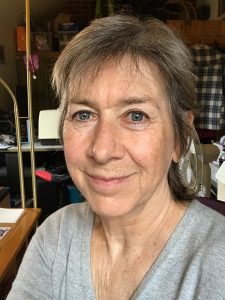
Varying individual images of a man and a woman

Buying into a ‘look’ and know what’s really going on.

Do you buy into a particular fashion trend?

When I say ‘fashion’, I’m including clothes, shoes, makeup and now cosmetic enhancements – do you buy into the current ‘look’ and know what’s really going on.

Some of my blogs may start off and appear not to have much to do with photography. But over the last 19 months of writing, there is always a vital and relevant connection. They are always on a subject that affects how people feel in front of a camera or what they see in an image. This could be a direct attachment to a subject, or a general underlying influence that has affected you over a period of time.

This one is mainly based on our attitude to following fashions and why we do it in relation to how we see and feel about ourselves.

Clothes:

Now I love clothes and make-up as much as anyone and have probably adopted different styles over the years. But my attitude has changed also… for the better (I consider) I’m glad to add. Once, I would try something on and be disappointed in the result, because my basic self-esteem on how I looked was not the greatest. Yes, I would see a fashion or trend and try to replicate that look. What I saw in a picture was what I thought I wanted to be like and how I wanted others to see me… whether it suited me or not!

Valuable guidance

Working as a photographer, I frequently get asked for advice on what to wear for a shoot. I give them a few tips, but also recommend they consider the services of a stylist. Such a person can help them with what colours and styles suit them, whatever age, shape and size they are at. Many will also help you make the best use of your existing wardrobe, rather than buying new.

Below, I’ve shared a video interview with Shirley Webb, who is a colour and clothes stylist.

Fortunately, I’ve never been a ‘label’ follower. Yes, I look for decent quality clothes, but not highly priced, recognised branded items. There is nothing wrong in these items if you really love it, looks good on you and you can afford. But there are those who will buy into this, regardless of its cost and whether they can afford it, simply because of it’s name. Many believe they will be judged positively because of what they are wearing, believing it creates a sense of where they sit in society.

Makeup:

Once I would never go out, or go to work without some on. Why? Because I didn’t want people to see the real me. I had been conditioned in my younger years to think that the ‘look’ of makeup was expected and I’d be judged by not ‘looking my best’. But not so influenced to remember my grandmother suggesting my own mother should wear a little more. My mum never did wear a great deal, she was busy bringing up five children, so her priorities were elsewhere.

So my use of make-up has now vastly reduced. I can happily go out with or without makeup and confident in how I look. So I wear it when it suits me now and enjoy the look of both.

Cosmetic enhancements:

This one I question the most, however for many is a regular expenditure:

  • Botox
  • Lip augmentation
  • Facelift
  • Eyelid lift
  • Forehead lift
  • Rhinoplasty
  • Plastic Surgery
  • Breast augmentation
  • Liposuction

I’ve never had any of these as I don’t consider I need them. However, having never experienced any, will try and stay balanced in my opinions, as once upon a time a younger me may have felt differently.

Yes, I can completely see why some might be helpful and favourable in certain circumstances. They have perhaps been born, or experienced changes to their appearance through accident or disfigurement. This can already have led to a lifetime of challenges with bullying or judgement.

I also empathise with those who’ve already bought into this option for whatever reason they felt it necessary.

Fashions change!

Of course they do and will always continue to do so through time. Why does this happen? Well yes, we all need to buy clothes for practical reasons but would also want to look good in them… nothing wrong in that. From my own observations it’s driven by the big corporates who sell us ‘fashion’ and our insatiable want to carve an identity in how we look. One feeds the other.

Therefore, if you’ve bought into permanent cosmetic enhancements to be part of a particular look or style – what happens when that fashion changes? Our skin is our largest organ and serves many purposes. It’s not there just as an aesthetic covering.

How I want others to see me

I don’t know when I became aware that this life is not a competition – it’s really not.
Or, looking for approval from others in how I look in order to fit in – is not needed.
Or, perhaps it was when I introduced the idea to myself that I’m exactly as I should be just as I am.
Or, I stopped criticising myself and wanting to change things.

I choose to buy into MY own look and continue to nurture that thought that I am enough.

This leads me onto that word ‘perfect’.

When we apply it to ourselves, does the word ‘perfect’ get taken out of context?

If we can agree that we are all different and unique in our own ways, why do we consider ourselves as having ‘imperfections’?

Who has the authority to say a particular size, shape… or ‘look’ is what we should be aiming for to be a ‘somebody’?

If it makes us individually feel better to make a change in ourselves then we do it for us and not for others. Why should we entertain others judging us on our size or looks?

When we start to consider and embrace that we are already perfect, you can start to like and love what you see to a level you never thought possible.

Yes that might seem like a goal many of us couldn’t achieve. But, what have you got to lose by trying? Is buying into a particular look because you compare yourself to others, the best reason?

Being photographed and viewing images of ourselves, simply underlines and exposes that view we have of self.

 *****************************


*****************************

Don’t forget to visit the Love Your Image You Tube channel and find the top tips for getting in front of a camera.

Love Your Image on You Tube

 *****************************

Have your free review and find out how to move forward with getting in front of a camera.

Review Your Image

********************************************

Images of unhappy people not enjoying being photographed.

Social media, advertising and our self-esteem

Social media, advertising and our self-esteem.


Powerful influences, invisible by their constant visibility!


If you have phones, tablets, computers and TVs, you’re exposed to advertising and social media.

Yes, we can create ‘free’ accounts on all the various platforms, in return for placing adverts and ‘sponsored’ or ‘suggested’ postings in our viewing. Algorithms cleverly watch what you view and search on, to tailor the adverts and posts you see. But how aware are you of the effects of social media, advertising and our self-esteem? 


Should the very word ‘influencers’ on platforms such as Instagram and TikTok ring alarm bells?


What’s this got to do with photography and getting in front of a camera?

Well quite a lot really – mainly in the way it influences how people see themselves in an image.

I’d love to say I see as many positive comment as negative, but I don’t. However, I’ll let you be the judge of that in comments you see and read on your own platforms.

Is all advertising and social media bad?

Definitely not – there are many things we see or search on, that are useful to us and just what you need in your personal or business life. People can also be very supportive of each other in images they see of their friends and loved ones. So I’ve become quite an observer of these influences and the way they operate.

But it’s a lot to do with how easily you are influenced?

This is what I often observe:

  • Are they trying to make me feel bad about myself in order to sell me something?
  • Are they using urgent time scale pressure, so I will make a quick decision to buy/commit?
  • Are they using sensationalism or ‘click bait’ to draw me in?
  • Are they using peer pressure, so I will want to be part of that gang or tribe?

I use the word ‘they’, because there are humans who make decisions on marketing strategies. The algorithms, mainly collect the data they want to know about on peoples behaviour – that includes you.

I could go on…

What’s the damaging end result in amongst all this, if the above list works?

People, thinking they should be more like this that or the other, or have this that or the other, because they are led to believe they will then be a better person, or, accepted and ‘fit in’ to society.

I hope you get an idea of what I’m observing here. People can be subconsciously influenced to have a poor image of themselves, for no good reason! However, it’s something I both hear and observe in many who come to work with me. Yes, I include myself in that as a younger person, when I hated my photograph being taken. A lot of it was to do with my own self-esteem and how I viewed myself.

At this point I’d like to share a very relevant and current You Tube video from Dove:

Dove Self-Esteem project video.


Realising if we are to truly be in charge of our own lives and the decisions we make, for the sake of our own mental health, awareness of these influences is absolutely key.

Yes there are many plus points having the technology to connect with each other and, have easy access to important information so freely. However many in society are being blindly led in a direction these influences want them to go and most of us are exposed to this much of our waking day.

Remember it is you and you alone who are in charge of your life.

You can be in control of what you see and hear. Be aware of what influences your life. Others will respect you far more for being your own person.

So, how aware are you of the effects of social media, advertising and our self-esteem?


Do you want to be in charge, or be influenced?


******************

If this has been helpful to you, you can sign up to the Love Your Image mailing list and be advised when a new blog is published. https://loveyourimage.co.uk/blogspot/ 

You can also subscribe to the Love Your Image You Tube channel and benefit from regular tips on getting in front of a camera. https://www.youtube.com/channel/UCSAtg3HmSQBsoVugqs21Nlw

*****************************************

Five selfie images, taken with both phone and pro cameras.

Pro camera v phone camera – what’s the difference?

Why does it take me so many attempts to get a good selfie? Pro camera v phone camera – what’s the difference?

Selfie, after selfie, after selfie… you take several, to finally get one you think will be just about ok – sound familiar? Have you ever considered the different results between a pro camera and a phone camera?

It’s an observation I hear frequently.

‘But we all have the cameras on our phones so I can do my own headshots can’t I?’…

Now before you switch off, I’m NOT going to get technical, although the differences are all technical. I’m going to show you comparisons and why it makes a difference to the way you view your own image.

As always, I often refer to related content in a previous blog, take a read, it may help: Using Phone cameras and filters.

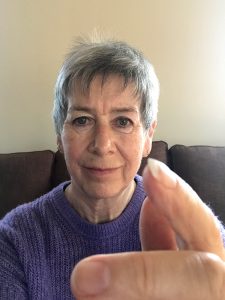
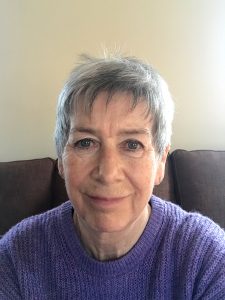
The following two images were taken in the same spot, same angle, minutes apart, very similar ratio crop, no retouching:

The first was taken on an phone camera – The second taken on my professional camera:

Selfie image, full on to the camera, no re-touching.

Selfie image, taken on a phone, illustrating distortion.

Selfie image, taken on a professional camera, no-retouching.

A selfie image, taken with a professional DSLR camera.


Firstly, let me point out the distortion on my facial features, which is pretty obvious as you can see. The image taken on my pro camera is far more representative of who I am and what I look like.

I promised I wouldn’t get technical … but these are all technical issues and if you want to know more on that, please get in touch.

Secondly, the colour representation. In fairness to our phone cameras, (especially the newer models) they can do a pretty good job. However, that’s often when there is plenty of natural daylight. The jumper colour is really accurate with my pro camera.

Thirdly, the light level. Although there was reasonably good ambient light, I didn’t have a good source of natural daylight directly on my face. You can see the difference in how the two cameras managed it.

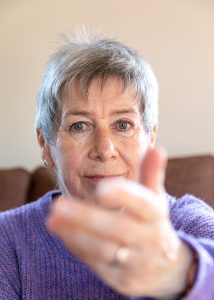
The following two images were again taken in the same spot, same angle, minutes apart, very similar ratio crop, no retouching:

The first was taken on an iPhone – The second taken on my professional camera:

Selfie image, with part of my hand in view.

This is a second illustration of phone camera distortion.

Selfie taken on a professional camera with part of my hand visible in front.

Selfie on a professional DSLR camera comparison.


This illustrates the distortion again. While I was holding my hand the same distance from the lens, my fingers are clearly much larger in the first image. Again, the colour representation and light levels differ too.

The following two images are a little older, both taken with a phone camera, a little further away from the lens.

You can still see some distortion in these, but as they are further away from the camera, it’s less obvious.

Selfie taken at arms length.

Selfie taken at arms length with slightly less distortion.

Selfie taken further away.

This selfie taken at arms length illustrates slightly less distortion.

What’s this comparison got to do with how we see ourselves?

I may have mentioned this before, but it’s worth covering again. One of the first things that can cause us to question or dislike an image of ourselves is ‘unfamiliarity’. We are used to seeing ourselves in the mirror. However, when we see a  photograph, it’s the other way round, which is how everyone else sees us. We may all think our faces are symmetrical, but we’re not. So slight differences on each side of our face are reversed. Add to this additional unflattering distortion as shown above, potential for poor lighting, wrong angle, and it’s no wonder people keep trying to take selfies unsuccessfully.

Pro camera v phone camera – what’s the difference?

In conclusion, you can clearly see quite a difference between phone camera images and those taken on a professional DSLR. So working with a professional photographer, is not just about their knowledge of how to get the best from you. It’s the type of camera they are using too.

Both the following help sessions are good starters for you to understand more about the images you have and why you might not be so keen on them, especially if they were taken on a phone camera:

https://loveyourimage.co.uk/review-your-image/

https://loveyourimage.co.uk/explore-your-image/

Did you know Love Your Image is on LinkedIn?

*****************************************
 

Woman wearing a suit of armour

Is judgement human nature or a choice?

Is judgement human nature or a choice?

Sticks and stones can break my bones but words will never hurt me… or do they …? Cue the suit of armour!

We all do it, but we hate when it’s done to us.

Judgement is everywhere – we all have opinions on a lot of things throughout our lives.

Unless you’ve had a particular incident that you can relate back to, a fear of being judged is one of the biggest contributors for a dislike of being photographed.

It’s a frequent observation when meeting and working with new people in front of a camera. The apprehension and anxiety is visible. Until they realise there is no judgement or expectation for them to be anything else but themselves.

This ties in with the last blog regarding the values and expectations we learn from birth. It’s taken me years of my life to understand this. I work on changing things when I consider necessary, in my efforts to be a better human being… there, I’ve just made a judgement upon my own life.

Let’s look at what judgement or, to judge means.

We all have opinions on things – so is it when we share or verbalise an opinion that it becomes a judgement? That may depend on whether it’s referring to a fact, or, judgement being passed, as in a court of law. When it comes to speaking/posting a personal opinion about someone/group of people, are we aware of the impact it could have on their life?

The one thing you can be sure of… if you judge others, you in return will be judged.

Yes we have far more freedom of speech in the UK than some other countries. So perhaps some see it as their right to pass judgement? However, it doesn’t change universal law that what you give out, you will get back.

  • Have you ever considered reducing the amount you judge?
  • Refrain from verbalising an opinion a little more often?
  • Would it make you a happier person?
  • Would it change the dynamics of your relationships with others?

Who are we to pass comment on someone when we perhaps know little about them, or their life. Or how their day was panning out when you crossed paths with them? Is judgement only considered negatively, or can you have positive judgement?

All points to consider.

To change this in ourselves, we first need to understand why we do it.

Many of us live a life of comparison and trying to be what others expect, for fear of being judged. It’s born out of wanting to be accepted, liked, loved and to fit in. It takes, a lot of learning, self assurance, confidence and belief in yourself to feel comfortable NOT to do this. Reading that back, I’m thinking “Why would we do that to ourselves?” But we do.

How do we deal with judgement and what can we do about it?

We may not have control of what people say to us. But we definitely have control and choice of how think and behave when it’s dished out!

When we receive judgement, our initial reaction can be one of upset and hurt. You may feel you want to hit back and defend yourself. Please remember to keep this in context of a particular situation. But you can learn to realise, things people say, speaks much more about them, than it does about you. Judgement from one person, may be a compliment from another, according to their opinion. How many times have you heard an opinion being voiced? But it wasn’t asked for and was fairly obviously unnecessary.

It’s a challenge to keep our opinions to ourselves when others have been judgemental to us. Very often, it’s said in jest, or it can be followed up with “I was only joking”. If you’ve been following my blogs, I refer to an example I shared in Photographer Responsibility – part 2.

There is strength and power in knowing when to stay silent and when to respond.

Very often things others say stay with us, cause us to doubt ourselves, and question what we do and who we are. This is something some people will have endured for many years. It can cover all sorts of things, in every area of our lives. How we behave – even expectations in what we look like in our dress and style. It’s often most difficult to deal with if we are tired or feeling a little low.

What positive can come out of this? An individuals unique personality will always want to break through and be itself. You can start your journey of change to become who you want to be.
*** Awareness of ourselves is key to helping you on that path.

Being stronger to deal with judgement starts with ourselves.

Be kinder to yourself and stop giving yourself a hard time, it’s not a sign of weakness or giving in. If you feel you’ve made errors in the past, you were simply doing your best at the time. Judging others less will also reap its rewards.

So in answer to my original heading question. Is judgement human nature or a choice? I believe it’s a mix of both. Yes it’s part of human nature, but you do have a choice and can learn to deal with it. Start changing some lifetime habits. As I mentioned previously, it is essential for someone to feel they can be themselves when being photographed, without fear of being judged.

A date for your diaries 🙂 – this blog ties in perfectly with the event.

*** I will be one of the panelists at the ‘BE YOU’ event on April 28th 2023 in Bury St Edmunds at The Athenaeum. It’s all about driving change through conversation and support, to help you BE YOU. Do book your ticket and come along :).

Don’t forget, you can follow me on social media channels and check out and subscribe to the Love Your Image You Tube channel.

***********************************

Five different images of life as we know it.

Culture shock photography!

Does the culture and society we live in affect our attitude towards being photographed?

Does the culture and society we live in affect our attitude towards being photographed? Here in the UK, we live in what is considered a modern civilised society. We are a developed country, as like Europe, Canada, North America, Australia, New Zealand. But the world is ever more multicultural, and effects of our society filter through to other countries and cultures. Made ever easier with the growth of the internet, mobile phones and social media connectivity.

One thing that is certain, culture, fashion, image, beauty, styles, all evolve and change over the centuries. In my opinion one of the things that can drive change and evolution in a culture is money. Whether it’s a lack of it, or lots of it. Innovation is and can be great for the world population. Although as mankind has discovered that can come at a cost when misused.

But what’s all this got to do with getting in front of a camera?

Well the culture we are born into and grow up in is going to have a profound effect on our learning and development. Yes it’s also got a lot to do with those closest to us. If they’ve grown up in the same environment, a lot of expectations and beliefs can be very similar.

Now we are getting closer to the point…

Part of our belief system that we learn and develop from when we are children, comes from the society we are born into. Our youngsters haven’t experienced a world where the internet and computers, including mobile devices didn’t exist.

Each generation can be heard to say “when I was young, we didn’t have (this that or the other) … “. You’ve only got to search YouTube for Monty Python’s Yorkshireman sketch if you fancy a real giggle on this.

But somewhere in the world there are children who live without access to clean water. Have nothing more than the clothes they stand in, let alone a TV or a mobile phone.

This blog is not about the right and wrong of these things. It’s to highlight the beliefs we form, including that of ourselves, according to the world we are raised in.

Somewhere in the world all these things have been and are considered beautiful and attractive:

  • Large in size
  • Tooth sharpening
  • Lip and neck stretching
  • Flawless skin
  • Small feet
  • Pale skin
  • Dark skin

In our world, we can easily see ourselves. We have mirrors. We have phones and cameras with which we can capture pictures. As a two year old, you may have discovered yourself in a mirror, and kissed your reflection. When was the last time you were able to look in a mirror, and genuinely love what you see?

Nowadays, we have ‘trendsetters’ and ‘influencers’ on platforms like Instagram and TikTok.

Copying a style has become normal. The pressure to confirm and be like others in our peer groups is HUGE.Reality TV produce series in the name of ‘entertainment’ that further highlight current ‘trends’. It’s invisible in its normality as an accepted part of our daily life… until it causes us problems. The term ‘reality TV’ itself I find questionable. Does it really reflect real life and real people? Trendsetters and influencers can be an inspiration to many and be a positive thing in lots of ways. However, it’s the expectations we put on ourselves, to be like this that or the other that I find unsettling.

Some people lives their lives by others benchmarks.

I’ve always wanted to encourage people to be their own person and to learn to love who they are.

For those who don’t like being photographed or seeing the results, it can have evolved from the belief system they developed in the society they grew up in. This would include how they see themselves – not something you would necessarily be aware of. There is another given in life. WE are responsible for ourselves and the person we become. This is made up of the choices we make and how we get there. Yes life has a habit of throwing us good things and big ‘ol curve balls. We can’t necessarily change what has happened, but we can change and be in control of how we react.

The pandemic has highlighted our need to take care of our mental health…

Perhaps there are some positive things to come out of the challenge of the past 3 years. If it causes us to be more aware of ourselves and what affects us, it’s never too late to make changes to feel happier and healthier… and love who we are and what we see.

*******

If you haven’t already, please sign up to the Love Your Image mailing list, and you won’t miss out on any updates, news or new information.

For those who find getting in front of the camera for Video, there will soon be a series of Video shorts on the Love Your Image You Tube channel – using a personal project for illustration, these will be video clips on creating videos 😎

*************************************

Three different photographs of women and one of a couple.

Photoshop and airbrushing

You can change anything in an image now using Photoshop and airbrushing.

This is a software program I use nearly everyday – it enables me to shoot in Camera Raw and open the images in Photoshop to edit … WAIT … that’s already too technical and if you haven’t switched of, let me explain something that will make a lot more sense to you.

I’m sure most of you have heard of the term ‘photoshopped’, it’s even in the dictionary! In brief it is image editing software. It’s the industry standard widely used by Photographers, Videographers, Graphic Designers and many other creatives. It is huge and very versatile. You can use it for years and still find you only access a small part.

As a professional photographer, I need to get as much right in camera as possible rather than spending hours in Photoshop afterwards. However, generally speaking, there are situations where I need to be able to correct an image because conditions were not quite right at the time of taking the image. Photoshop enables me to do this – i.e. adjust the light levels, colour balance, improve the crop. Most of these are only small adjustments, and is part of the processing.

However, most of you who know me as a photographer of people and that is the focus in this blog, so …

Are you aware of just how much can be changed and its effect on how we see ourselves?

To illustrate, the two following images of myself, say it all really. I would add however, that while the two examples are a bit extreme (in my opinion), a lot of media airbrushing that happens, is barely noticeable and it’s kept very realistic. Leading us to truly believe that models, celebrities and those frequently in printed media do look just like that.

A self portrait without airbrushing or being photoshopped

Before editing …


An airbrushed self portrait photograph.

After editing …


If I was happy and liked the results of the second one, what I’ve really said is …

“I don’t like how I look in the first image”

or

“I’m not good enough without some re-touching”

But if you hadn’t met me, what would you think if I used the second image as a headshot!

If you are in business and out and about networking, what does your headshot say about you? This is what people may have seen before they meet you for real.

Where has all this come from???

Before editing software was available, photographers had to get it right in camera, or have a very fiddly task of correcting something on a film photograph. With the rise of digital cameras has come the development of editing software. Don’t get me wrong the software editing tool is hugely useful for all sorts of things. My concern here is what it can do to our self esteem.

Here are a few examples where I would and have agreed to correct:

  • An engagement shoot and there was a very sunburnt nose on display.
  • Someone had a tooth fall out and the person was having it replaced with an implant.
  • A black eye!

You never know what might happen just before a booked shoot.

However, technology develops at a great pace.

Our younger generation especially, don’t know an age when photo re-touching at the touch of a few buttons didn’t exist.

The following video is by Dove and has been in circulation for about a year now.

Why aren’t we telling all young girls that they are beautiful just as they are???


Well hats off to Kate Winslet – in this this particular video as she removes her makeup, but the message is the same, whether it’s makeup, or digital editing.

BUT Christmas is round the corner, so let’s finish this blog with some positive tips.

If you are heading off to Christmas and New Year parties, or catching up with friends and family, the cameras will be out in abundance!

If you’ve been following my posts on social media, or have signed up to receive the top-tips, yes all these things apply. However, we are talking about situations where there will be a lot more spontaneous moments. The tip on lighting still applies, but there will likely not be an opportunity to do anything about it… you may be amongst dance floor lights, Christmas lights, and spotlights!

  • Tip 1 – Don’t stand and wait to be positioned. Whether on your own or in a group, it’s unlikely to happen! Position yourself at an angle that is comfortable for you and watch the person with the camera at all times!
  • Tip 2 – Be yourself, and in the moment. Not all successful photographs have to be looking to camera.
  • Tip 3 – Get the person in charge of their camera, to give you some idea of when they are taking the photograph! You can do this too when capturing others.
  • Tip 4 – Don’t let others make you feel awkward or bad if you politely decline to be in a photograph. They are not in your shoes or understand how you feel.
  • Tip 5 – Typical example of what can happen when people are just not ready … and seconds later when they are. Give people a chance to be at ease and smiling.
Image illustrating two photographs taken seconds apart.

Let people know when the shot is being taken!

These tips will be posted on my social media platforms each Friday throughout December, with an image to illustrate. However you get to have the tips early :).

I hope there will be another blog before the end of the year, but in the meantime, do have a happy and enjoyable festive period, wherever you are and whoever you share it with. 

PS – don’t forget Love Your Image has a You Tube channel

PPS – If you haven’t already done so, do sign up to the mailing list and always be notified when there is new content to devour!

**********************************
Five images of same women with different expressions

Positive and negative associations being photographed.

What have positive and negative associations got to do with being photographed?

What have positive and negative associations got to do with being photographed? We spend much of our lives experiencing positives and negatives and what we do and don’t like. This can be in the things we choose to do and have to do. Perhaps, we’ve discovered a favourite holiday destination and some will choose to return to the same place regularly. It’s their happy place. We gravitate towards the things we enjoy by choice and strive to keep most of it positive and rewarding.

Some things may be more of a challenge to us for whatever reason. But often have to be done as a necessary aspect of achieving a more enjoyable life.

But what has this got to do with being photographed and seeing images of ourselves?

For many, we dislike the experience of being photographed as it reminds us of something really unpleasant from the past. It can be from childhood, or come from anywhere in our adult years. The resulting images just reflect that back to us with a negative reminder. It could be from a specific event, or just as commonly, a combination of learned behaviours and expectations.

Positive and negative associations being photographed – however, interestingly, we seem to remember the negatives more than the positives. So yes, you have positive associations from life. They are simply the things that don’t bother you in the least and you give them little thought. I’ll come onto these further on.

Referring back to my previous blog on “Body Parts in Photographs”. Lets take a look at a few general examples and how an association brought them to their current thinking:

‘I don’t like my teeth showing’

A child may have worn braces as a younger person and told to keep their mouth closed for a photograph.

“I hide my ears with my hair”

At school a child was told to tie their hair back and were teased about their ears.

“I want to lose some weight before I see you”

Weight is a common issue for many and may have been a source of negative comments. Or, we have learned by association through advertising and social media pressure that we should be thinner. This can lead to a challenge with self-esteem. It is further confirmed by the western culture we live in and the expectations placed on us.

Comments we have had from the past:


“You must have been beautiful when you were younger”


“You always ruined the photographs when you were a child”


Yes, sadly I’ve heard all of these and many many more.

So our current negative thinking towards being photographed can come from strong associations with things that have happened in our lives. In almost all instances, it was never your fault or responsibility. I refer back to another recent blog “What really going on in a photograph”


But as these are learned behaviours and associations, they can be changed.

I mentioned earlier that we also have positive associations. From my own journey, I have a list of both negatives and positives that shaped how I felt in front of a camera. Discovering this has given me power to my elbow (so to speak). It gave me the opportunity to target the things I wanted to change. It gave me the opportunity to reflect and feel good about the positives.

Fortunately society is beginning to change its thinking and attitudes and becoming inclusive to everyone, whatever, size, age, colour, culture, or sexuality. All the things that may have been cause of a negative association. This can also be a generational thing and take society quite a time to acknowledge.

There can be more complex areas of associations, but nearly all connect with how you felt at the time. So part of your journey to LoveYourImage can be identifying these negatives, understanding and changing them. 

Love Your Image also has a You Tube channel. There will be more recorded conversations coming soon, so make sure you’re signed up to the mailing list and be notified when new articles and videos are published.

*********************************
Five different photographs of a man standing

Body parts in photographs!

I could have made this article sound like an autopsy, with a heading on ‘body parts in photographs’!


To some of us, a particular part of our anatomy
can be a bit like ‘the elephant in the room’. When having a camera pointed at us, or investing in a photoshoot, it’s the main thing we focus on in a negative way.

It can be one thing, or several elements you fixate on and dislike.

Over the years I’ve heard and observed a wide variety of areas that get the ‘thumbs down’:

  • “No profile shots, I’m conscious of my nose”
  • “I have to hide my ears with my hair”
  • “I don’t like my teeth showing”
  • “What can you do with my lazy eye?”
  • “My arms are a bit fat”
  • “I want to lose some weight before I come and see you”
  • “Can you lose my chins?”
  • “My hair… (yes even this)”
  • “Can you photoshop my lines out?”
  • “I smile like a cheshire cat!”
  • “I have a scar…”

… the list is long and varied – but I get it, I know the things that I thought were my problem areas many years ago.

When people ask if I can ‘photoshop’ them in an image, my answer is this:


“I can, but then all I’m doing is agreeing that you’re not good enough without correction”
. (I will be writing more on photoshopping in another blog). Please do remember, this is solely your opinion of yourself.

Without exception, you are great the way you are. But, I DO understand things that challenge you and am here to help you start that process of viewing yourself differently.

Some people fear being judged, or have indeed had this happen. It could have been from many years ago… it’s not pleasant.

TO EVERYONE

All who know you, matter to you and love you, will accept you as you are.

TO EVERYONE

Judgement says everything about the person who is dishing it out and not about you (Judgement is also the subject of another blog).

You may begin to observe that I refer to other blogs that have been written and future blog subjects that will be covered. These will always be relevant to what I’m getting across in the current article.

So let’s keep this relevant to the matter in hand. To begin the process that will help you, rather than removing an item, I work at taking away the focus from that element. This can help you have a completely different view on it. Yes it still needs to be part of an overall pleasing image in all other aspects.

It’s achieved by the lighting used, the angles used and the right communication with the person being photographed to capture your spontaneous expressions.

Let me give you some examples:


Where someones teeth showing is their challenge
– to work with half smiles if often successful. To allow someone to keep their mouth tightly closed, just causes tension around the mouth and jaw.

Chins is a common one – one trick is to get someone to lean towards the camera a little. It does’t take much… too much lean and it will look odd. Very often if someone suddenly has a fit of laughter, it can cause them to pull their chin in… giving themselves an extra chin which they don’t normally have.

Let’s say someones right eye doesn’t open quite as much as the other. I don’t like using the term ‘lazy’ as this makes it sound quite derogatory. Turn the right side of the face slightly towards the camera, have the camera a little above the subject, causing them to naturally look up towards the lens. This can often open that eye a little more than normal.

Facial lines – by flooding the face with light, without removing all shadow. Shade context gives your face shape and the unique expression that is you. This can either be using the right studio lighting, or finding the right natural light source. This can also apply to scars.

I can’t stress enough that adjustments in position, angle, height, light, really don’t need to be too much to achieve effective results. As already mentioned, the success is also in your spontaneous expression achieved by the communication with your photographer.

This blog brings a little insight to part of the process of helping you accept the tremendous individual that you already are.

If you haven’t already done so, do sign up to the mailing list and make sure you receive all blogs and videos as they are published – Sign up to the newsletter

Don’t forget there is also a You Tube channel, with a growing number of ‘recorded conversation’ with people who are experts in their field and their subject has a close connection with the concept of Love Your Image

Five half height photographs of a man. Varying poses.

What’s really going on in a photograph?

I’m just not photogenic… or am I?

What’s really going on in a photograph? When we see an image of ourselves, we don’t see past it. We just see it as something perhaps we like or we don’t. If it’s one you like, great! But if it’s not, it can be part of a subconscious downward spiral to constant disappointment – leading you to believe you are not photogenic.

There are different reasons we do or don’t like an image.

But our decision will be based on a judgement about ourselves. Understanding a bit more of what’s happening in a photograph can be essential to helping you improve any dislike of an image. Not to necessarily like it, but to realise why it didn’t turn out so well – this doesn’t mean you are not photogenic!

A photograph captures a split second in time.

It brings together many elements. That single moment is all important to how you view the results. Let me expand on this slightly. We are producing expressions that are uniquely us, all the time, depending on where and who we are with. Because a photograph is of a single moment, it’s a skilled person who observes and captures you in an image that you will love. Not because you are a difficult subject, but because they know what it takes to capture that moment.

I’ve separated reasons into five main points and explained some of what was going on:

  • Photographer responsibility.
  • Technical issues.
  • Masking.
  • Comparing ourselves.
  • Judging ourselves

Photographer responsibility.

This was the topic of two earlier blogs – do take a read – Photographer responsibility Part 1Photographer responsibility Part 2. It could give you more insight. Who was taking the photograph? If you were captured either off-guard, or unexpectedly, perhaps the photographer wasn’t focusing on capturing you at your best, or, they didn’t know how to. Perhaps they didn’t consider how you were feeling.

Technical issues.

This was touched on in the last blog – again take a read – Using Phone Cameras and Filters – it could be helpful.

Don’t forget about the distortion that happens, if either you or someone else was capturing you on a phone camera. The camera may have been too low, or from a less than flattering angle.

The light was maybe harsh and unforgiving, perhaps because of bright midday sunlight, or, overhead artificial light. As I mentioned in the blog, people now assume that their phones will do it all for them.

Masking.

You’re requested to be in a photograph and beginning to feel anxious and uncomfortable and your stomach churns. You could also feel distracted and not know how to stand/sit/look and added to that you are not being guided. There’s no hiding at the back and you would rather not be there. So at best you grin and bear it, or put on a ‘mask’ to just get through. Tension, anxiety and feeling highly uneasy is going to show through.

These three points ARE NOT YOUR FAULT

But no-one else gives any consideration to this and leaves you berating yourself for taking a far from acceptable image, on the assumption it’s your responsibility – well it’s not!

The next two are deeply personal and individual.

Comparing ourselves to others.

Looking good in an image is actually not a competition, but many measure it this way. Social media and advertising pile on the pressure, causing us to think we should look like something/someone else. In reality, whether you can achieve it or not is another thing. We are lead to believe that if we buy a particular product, or have a particular treatment, we can! All to follow a particular trend and fit in with our peer group.

Judging ourselves.

I was recently chatting to a lady at an event about ‘Love Your Image’. She quite matter-of-fact announced that a particular lady (nearby) was beautiful and she (herself) was not. It was that black and white to her. How we see ourselves is of course deeply personal. Negative self judgement can be so ingrained, it’s barely a conscious thought or action anymore, as we do it so regularly. It has truly become a habit… a bad one. We’ve taught our brains, with our life experiences and values to automatically think that way.

So that’s the negatives covered – but all is not lost.

EVERY SINGLE POINT LISTED HAS A POSITIVE ASPECT.

Everyone can take a good photograph, yes everyone.

I once had a photograph taken to record quite a big achievement – I’d just cycled 100 miles in a day. I’d spent 3 months preparing and getting fit enough. It was a shot taken on a phone, (not mine), quite close up, so lots of distortion. I was also exhausted… it showed! 🙁  But the image doesn’t bother me, because I understand what was behind it.

I’ve shared an example to illustrate one of the above points – which point do you think these come under?

Group of people un-prepared for their photograph.

What’s going on in a photograph – this shows a group of people un-prepared for their photograph.


Happy group of people all smiling to camera

What’s going on in a photograph – a group all looking a lot more comfortable in front of the camera.

These two photographs are a perfect example of two moments in time, taken seconds apart – I remember them well, as I was there! As you can see, every single person in the group had no idea the photograph was being taken in the first image. The second is a much more pleasing image with everyone focusing towards the camera.

Do you relate to any of the points raised in this blog?

Did you know you can learn to get past all of these things?

If you haven’t already done so, do sign up to the mailing list and make sure you receive all blogs and videos as they are published. There is also now a You Tube channel for Love Your Image.

strip image showing four headshots of the same woman and someone holding an iPhone camera.

Using phone cameras and filters…

It’s great, I can do everything on my phone… or can I? 

It’s time to talk about the cameras most of us have.

The cameras we have on our phones and how we use them. Technology moves on at an incredibly fast pace, and has brought us so many new and convenient ways to communicate in different areas of our lives. Latest tech can be innovative and helpful, but can also bring new challenges. Let’s open up a few of these things and the positive and negative effects they bring in using phone cameras and filters.

Camera phones are built to make it easy – just open your camera app, point and shoot. If you have no knowledge of how cameras operate, this sounds fabulous. But when you don’t get the results you hope for – it’s frustrating, or, disappointing! I’m also generalising on the different phone models that most of us have and what we find happens. Some phones are better than others and the newer models are always adding features to improve them.

Differences in how camera phones and a full frame DSLR capture your likeness.

One of the main things is distortion.

You take a selfie and think “do I really look like that!”. I’m not going to get technical, but look at the comparisons I’ve used to illustrate, of my own selfies. The first was taken close up and personal the second at arms length. There is still distortion on the second, but not as noticeable as the first. Now if you dislike what you see in an image of yourself, this can be an issue. So, no that’s not what I truly look like!

Close to the camera selfie

Example of distortion in a selfie

Selfie taken at arms length

Distortion is still there, but less when held at arms length.


It’s a point worth remembering when you take a selfie, all you can achieve is to minimise the effect.

The angle and lighting – this can make a difference.

We all have different shape and contours to our face and bodies – it’s what makes us unique, individual and beautiful. The light and angles in a photograph, can display that individuality in different ways. It can be flattering and forgiving, contrasting and artistic, or, cold, hard and unforgiving. If you’re taking the photograph, you have control over this … with a little knowhow ;).

So it’s not about you being ‘photogenic’, there’s a lot more going on that has an effect on this, that’s not your fault!

By the way, going back to the subject of distortion, the angle you hold your camera at yourself, can have a marked effect on distortion. Yes this can be used in a creative way, but can also accentuate or detract from a nice selfie.

Take a look at the header image. 

The second one is too dark, because of bright light behind me and the third is a very poor angle from too low down – quite unflattering!

Using Filters…

The fact that we all have cameras on our phones and quick access to social media platforms, has brought about filters.

I’ve used a couple of images of myself, taken a while back to illustrate a little of what I mean. I’ve intentionally put them before and after – meaning, the first has been filtered, the second – filters are removed. I don’t want filters on me, I’m perfectly ok without them. I want people to be able to see, as close as possible, the real me – the one they would see when they meet me.

A portrait photograph with filter applied.

An example using a filter.

An unfiltered portrait photograph

An example without using a filter.


Understanding exactly what’s going on in a photograph and why one might look a bit more pleasing than others is the subject of the next blog. “But you’re a photographer, so you would know” – yes but I wasn’t always confident in front of a camera – I’ve learned how to be and the reason why I created Love Your Image to be able to help others.

It may be quite fun to apply stars, butterflies, big eyes and puppy ears, and yes, the positive benefit of using a filter to improve colour, contrast or light level is fine. I started this blog with It’s great, I can do everything on my phone…”. But filters have taken on a much more sinister and challenging effect, when used to change our appearance… your eye, lips, face, everything. Search on google for Snapchat, Instagram, and TikTok filters… beauty filter, goddess filter, movie star filter, … the list is endless. The fun and helpful element is one thing, but when you see the endless comments on the negative effect the trend for filters is having… it’s time to speak out.

SHOULD WE HAVE THEM AT ALL?

These all create something different to who we really are. I’ve seen it suggested that they achieve unrealistic perfection. We can agree that we are all unique and individual, otherwise we’d be clones. So there is no bible or manual out there that says one person is perfect and another isn’t? Is this really just saying ‘I’m not happy with what I look like without a filter?? When people meet you face to face, you’ll look nothing like they imagined.

So remember, when you see others on social media who seem to have very smooth skin, even light and big doe eyes, they have likely applied filters. What you are seeing is actually not real!

I’m going to leave this blog on a note to watch for the future – the rise of the ‘metaverse’ – for all it’s helpful aspects, will this be the next body dysmorphia challenge to humans?

If you’re not already on my mailing list, don’t forget to sign up and receive your free tips sheet. That way, each time a new blog or video is published, you will get to hear about it… yes, there is now a You Tube channel for Love Your Image – do take a look and subscribe if you’d like to be kept up to date 🙂