Tag Archives: Love Your Image

Individual photographs of two men and a woman - that's me you just described! - I don't like being photographed

“That’s me you’ve just described … ”

“That’s me you’ve just described! – I don’t like being photographed”

Over the years, I’ve given many presentations and networking pitches on the subject of being photographed. Particularly a dislike of it! I’ve lost count the number of times someone has afterwards said “that’s me you’ve just described – I don’t like being photographed”

We may or may not chat further.

They may still go away thinking they: 

  • can’t
  • won’t
  • or not ready

… to change how they feel.

However, the important thing is listen to what they are saying. Then gauge whether to continue the conversation and on what level.

Many may not even realise help is available – and that knowledge will give  them choice and is a great starting point.

I’ve always said it’s an individual journey for everyone.

  • We only adjust our thoughts when we’re ready to do so – fact.
  • Or when someone shows us a way forward we didn’t realise existed.
  • It might be a subconscious shift in perception.

All these reasons are perfectly ok and normal.

Over the years, I’ve done a lot of ‘seed planting’.

For many, a few words, tips and observations have been a starting point of change – that was all they needed. I’ve never directly worked with them, but seen a positive difference in their attitude to being in front of a camera – time for me to inwardly celebrate 🙂. 

For some it’s a much longer journey of gentle support and encouragement. There’s no expectation when they may feel ready to move on.

But the best thing is, (and take heart all of you) a change in perception isn’t necessarily a deep delve into the past. Or involve talking through past issues.
It can be a lot simpler and far more enjoyable than that!
 

Currently, the majority of those who come to work with me realise an avoidance of being photographed is not good for their business.

They really need new and up to date imagery. This is often what prompts them to get in touch. I’ll refer you back to a relevant earlier blog on business visibility and why it’s important – Personal Branding and being visible in your business – what does this mean for you?

Now testimonials are ALWAYS appreciated – and have shared snippets from a couple of reviews. Both are really relevant to what I’ve been referring to:

“…This was my second photo shoot with Penny, and once again, she was amazing! Over time, she’s really helped me shift how I feel about being in front of the camera. I used to dread having my photo taken and would pick apart every little detail afterward. But Penny’s supportive and professional approach has completely changed that…” Lorraine Clarke

…From the moment we started, Penny was professional, creative, and truly dedicated to capturing the best version of Kathryn and me. The photos turned out amazing. Crisp, clear, and full of personality. But more importantly, they’ve made a real impact on my business. I’ve had several new clients mention that they were drawn to my website because of the warm, smiley photos that Penny took. Their compliments have translated into actual business wins. I firmly believe that the quality of the images played a significant role…” Joanne Moss.

So next time I hear someone say – “that’s me you’ve just described – I don’t like being photographed” – I will ask (without expectation) “would you like to change that?”

***************************************

Don’t forget, keep an eye on the You Tube Channel for short videos on tips for getting in front of cameras – Penny Morgan Photography

Three images of a lady with different smiling expressions

How will you be left feeling?

How will you be left feeling?

How we are are feeling is very important in our lives.
It’s very powerful, but also very invisible.
It’s just that … a feeling, but something VERY influential to us.

People will always remember how you left them feeling.

What’s that got to do with photography? A huge amount actually… lets look at why.

So why is how we feel, connected to photography?

For whatever reason someone might not enjoy getting in front of a camera or indeed refuse to do so, it will be connected with a feeling of some sort.

When there is a dislike of getting in front of a camera, it will be a feeling from a negative association. This could go back to any period of time. 

You might want to dip back into a blog I wrote some time ago on positive and negative associations – https://www.blog.pennymorgan.co.uk/2025/03/15/positive-and-negative-associations-being-photographed/ 

  • It could be something mild.
  • It could be something really challenging.
  • It could be about any part of you, your personality and your physical appearance.
  • There can be a variety of complex reasons, but there is a positive side! 

Because the flip side of that can be just as powerful and impactful with positive associations:

These may be harder to remember, because we have a habit of focusing on the negatives. But those happy positive occasions will be there.

What we see and feel about ourselves is very connected to what we see in photographs. It will be part of the many reasons we do and don’t like getting in front of a camera.

For many years, holistic therapists have been listening to their clients and treating them for different ailments. These will be strongly and directly associated with how that person is feeling about themselves, their ailments, their relationships and place in life.

Therefore a further connection with how we feel and our wellbeing (another connection with recent blogs!).

I simply do this via photography.

It’s one of my highest priorities in a photoshoot that people leave feeling pretty good about themselves and that they’ve even enjoyed the experience … especially when they thought they wouldn’t. It happens frequently.

Love Your Image sessions, help someone identify those negative associations. We then work to change those perceptions, which is entirely achievable. https://www.pennymorgan.co.uk/gallery-collection/Love-Your-Image/C0000LT3su8s1leA

So if there is one thing you can do today (and everyday) for yourselves and towards those you talk to, is speak kindly of yourself and of others, feel kindly towards yourself and others and make today contain more happy associations.

It’s important to feel good about what we see in ourselves … even in the tough times … and it will help you find that confidence in front of a camera. 

*******************************************

Three images, family group, single female headshot and single female sitting on grass.

What does your wellbeing look like to you?

What does your wellbeing look like to you?

So I’ll start by asking you “What does your wellbeing look like to you?”  and we’ll come back to this question.

For many, wellbeing is associated to how we feel. When life is good and running smoothly we can feel great. When life throws us challenges to navigate through a period of time, we can feel tired, drained and stressed.

Your wellbeing is yours to define and look after and is individual to everyone.

High stress levels will mean our cortisol and stress hormones rise. If we live with high stress levels for any length of time, it can ultimately impact on our physical and mental wellbeing. When life challenges us like this, it can also lead to a deterioration in how we feel and see ourselves.

Back to that initial question ‘What does your wellbeing look like to you?’ As a photographer, I frequently observe (and hear) a connection between how people see themselves in photographs and how they feel about themselves in general. Especially for those who don’t like getting in front of a camera.

This is unique to everyone – what may affect some in a negative way, won’t even register with others. There is no right or wrong in either.

So how can we maintain a happy balanced life that we enjoy and thrive in? One in which we feel good about who we are and what we see.

We all have ‘stuff’ going on in our lives to manage and navigate. The life skills we have learned and developed, enable us to go to work, run a business, raise a family. All these things can impact our outlook and wellbeing.

Is a good awareness of ourselves our key anchor point to maintaining some life equilibrium and part of our skillset to coping with challenging times?

Are you a person who spends time thinking, ‘when I lose (or gain) weight’, when I have XYZ treatment’, ‘when I get a bit fitter’ … I’ll feel better about myself. Do you think it’s actually important to like and love yourself as you are now, whatever size, shape, colour or package you come in?

Another big thing that can shape our views of self, is a learning for many of – ‘act as if everything is ok’, don’t talk about that problem’, ‘don’t make a fuss’, ‘this was all your fault’. We stay quiet and hope it will go away. But this can hide a plethora of problems that we end up living with.

It can be a big challenge and change for many of us to openly admit not all is well and find the courage to seek help and support.

Where can we find the answers to maintaining a healthy sense of wellbeing?

You can get help and support with so many things these days. Being a great subscriber in a more holistic approach to looking after myself, can vouch for the benefits of many therapies. To name a few, such as acupuncture, meditation, yoga, NRT, physiotherapy, hypnotherapy, alongside our more traditional medicines via GP’s and hospitals.

During early lockdown I spent many hours studying the work of Dr Bruce Lipton. He is an American stem cell biologist and has found the scientific connection and proof that our genes do not control our biology. Rather your mind is your key to the control you have over yourself. Well why wouldn’t it, after all it is all you. Your body isn’t some separate entity you have to live with. So this made perfect sense to me.

To return to the question ‘What does your wellbeing look like to you?’ How you see yourself and how you refer to yourself is very important. As a photographer, I see the absolute best in everyone and through my work with ‘Love Your Image’, help others to see it in themselves.

Truly loving ourselves, is one of the most powerful things we can do and greatly benefits our wellbeing.


You can find out more about Love Your Image on the website here

There are available help session within Love Your Image. You can find more information here

*******************************************

three images of a lady with questioning expression on her face

“The photos got inside my head!”

The photos got inside my head!

Yes this is something I heard very recently – “the photos got inside my head”! So my last blog was on what we think of ourselves when we look in the mirror, or see ourselves in a photograph. Following on from this, I heard an interesting story recently from a lady I know.

She and her family went on a holiday cruise earlier in the year. There were photograph opportunities organised for families and guests on board. In no uncertain terms, she relayed how it was the worst photoshoot experience she had ever had, and without all the detail, she hadn’t enjoyed the experience and hated the results.

BUT my biggest concern was when she then said that the photographs got inside my head’ and made her seriously doubt about how she looked. On their return, she went on a strict diet (because of how she felt) and did a family shoot at home using her phone and tripod. This was to re-assure herself that she didn’t look quite so bad.

Now I will often tell people, they may from time to time see images of themselves they’re not keen on, but it DOESN’T mean you can’t take a good one. This is to help them understand that often there are reasons and elements in a photograph that were outside their responsibility or control.

In a very early blog, I questioned the common saying ‘the camera never lies’. I still say this saying is not strictly true. Bear this in mind as you read…

Her story really troubled me and I found myself with all sorts of questions.

  • Did the shipping company use professional photographers?
  • How had they got the lights set?
  • Had they got the right angles for people?
  • Importantly, did the families and guests have an enjoyable experience?

Perhaps the photographers were rushed themselves if they had a lot of people to get through? However ‘conveyer belt’ photography is rarely going to achieve good results. If they were rushed, there was not going to be much opportunity for people to have a good experience.

From the information I was given the results of the images were far from flattering or accurate. However, whatever the photographers did or didn’t get right, it was how this particular lady was left feeling, when she stated – “the photos got inside my head”!

BUT as I mentioned earlier, it was the effect the results had on someones view of themselves.

Many people could see this as a reason to never want to be photographed again. While understandable, is perfectly avoidable.

So following on from last months blog, this is an interesting story of how we see ourselves in photographs. Perhaps it’s simply a knowledge thing, so ‘non photographers’ get some idea why some photographs are not particularly appealing.

Why do I bang on about the importance of lighting, angles and an enjoyable experience?

Because they are such important factors to achieving images you’ll love.

Have you ever had a similar experience?

There are other blogs you may find of interest on this subject:

Personal branding and being visible in your business
Social media, advertising and our self-esteem

******************************

Don’t forget, the You Tube channel has tips for being photographed running up to Christmas available 🙂
https://www.youtube.com/@lPenny-Morgan-Photography

******************************

NEWS – Watch this space!

With the new year just around the corner – I plan to merge Love Your Image with Penny Morgan Photography. 
More news on this coming soon 🙂

****************************************

Three different expressions of Penny in a pink jumper. What do you think of your image?

What do you think when you see yourself in an image?

What do you think when you see yourself in an image?

  • Are you hyper critical?
  • Are your thoughts different compared to looking in the mirror?
  • Or are you accepting and feel good about what you see?

Does it matter? After all these are your thoughts, nobody else needs to know or hear about them… do they?

Had you ever considered your body listens to everything you think and say about yourself.

Yes that is a fact and well, why wouldn’t it, it is after all you.

It fills me with much encouragement and hope that society in general is opening up and discussing mental health. This got me thinking how important it is that we learn to cultivate a positive view on what we see in ourselves.

Ok, let’s start with looking in a mirror.

How often do you practise gratitude for the person you are and where you are in life? You height, your colouring (skin and hair), your size, your age… yes especially age! So what do you think when you see yourself in an image?

  • Sometimes we can find ourselves in ‘comparing’ mode with others.
  • Sometimes we think we have a good outlook towards self, and then be over critical when it comes to seeing ourselves in a photo!
  • How many of us have said “if only I could lose a bit of weight” – I know I have in the past!

So why? Where did we learn all that? What good did it do us?

Much can come from our childhood years and the values and expectations we learned from finding our place in society. Comparisons and judgement could have been placed on us by sibling, school peers, teachers, parents and people we love.

I grew up in an era when Twiggy rose to fame and to be stick thin was in fashion. Not a lot of fun for those of us who were born a completely different shape! This followed the era of soft and curvy from the 50’s. The objectification of women was considered quite normal. It took me many years to stop thinking I could be a different shape!

But attitudes and generations are changing thankfully! Comments that were once considered ok, are no longer acceptable in society.

Every size, shape, gender, colour and age should be equal and celebrated. How we see ourselves is very attached to the balance of our mental health. Again something that is today discussed more openly and vitally important for us to be aware of.

Again you may think, ‘is it really that important?’ Well yes, as I said earlier, our body listens to everything we say about it. Have you ever heard the phrase ‘self fulfilling prophecy’? If you are overly self critical, be careful what you say, think and wish for.

So a positive self image is important especially when times get tough.

Our lives can be full of things that come along to challenge us and our personal confidence. Life can be trundling along happily, when something major can turn it on its head in an instant. If we already have a lot of self doubt and self criticism going on, it’s going to make things even tougher.

Cultivating a positive self image is very important and can be helped by several small simple daily tasks that will cost you nothing.

  • Practising gratitude for everything in your life.
  • Look in the mirror and tell the person looking back how much you love and appreciate them.
  • Be grateful for the person you are, even when life gets tough.
  • Learning to recognise negative thoughts and stopping them in their tracks.

Learning to recognise and deal with doubt about ourselves early on can help prevent a downward spiral.

Going back to our question, what do you think when you see yourself in an image? The next time you find yourself being self critical, stop and think where it could lead. Even if it was the result of a wrong decision and you are giving yourself a hard time. Be kinder and just promise you will choose differently next time. Once you’ve learned to observe the thoughts you have, you can make sure there are plenty of positive ones are in there.

Yes, being kinder and patient with yourself is a very good thing.

If you’d like to discuss how you feel about being in photographs, the experience and what you see – a free review, with no obligation is available for you at any time – Your Free Review

You may want to dip into other blogs covering many different reasons why we might not like getting in front of a camera – here are a couple for you to consider:

What does your well being look like to you?
Comfort zones, control and confidence – what comes first?

******************

Don’t forget, there is a Love Your Image You Tube channel that gets regularly added to – subscribe to the channel and you can be part of the conversation – Love Your Image on You Tube

**************************************

A lady receiving advise from a photographer and the finished results

Comfort Zones, confidence and control – what comes first?

What comes first to make a change or feel we are moving forward in our lives?

Comfort zones, confidence and control – what comes first? People who dislike getting in front of a camera and being photographed, often say they can’t imagine what it might be like to feel differently. For many it had’t even occurred to them this was something they could change. The turning points could be:

  • When it starts to impact something important to you.
  • When you realise it’s holding you back.
  • When you realise you don’t want to feel like that anymore.


So what happens first?

  • Do we just shut our eyes and step into the unknown, because what have we got to lose?
  • Do we need to find an element of confidence before we can step out of our comfort zone?
  • Do we need to have some control to take that step, in order for our confidence to grow?

Well yes, anyone of these things may be right for different people.


People feel out of control.

I’ve been hearing an increasing number of comments around the area of ‘control’ relating to getting in front of a camera. People feel out of control, or they have no control over the situation. This seems to be growing with our society’s use of phone cameras. More than that, an increased assumption in people that they can capture anybody anywhere without considering how individuals feel. Indeed, at a business event/networking meeting, you come to expect it will happen at some point.

  • You could be at a private gathering where you don’t necessarily know everyone.
  • You may not know where these images are going to end up.
  • You may feel even more uncomfortable asking to exclude yourself from the images.

You could feel trapped between a rock and a hard place.


Perhaps you have more control than you think.

So considering our subject of ‘comfort zones, confidence and control – what comes first’, perhaps you have more control than you think? You should always feel you are able to politely exclude yourself from images, without fear of judgement or complaint. Learning to deal with responses such as “oh you’ll be fine” or “well I want to capture everyone here”, is both achievable and empowering.

Learning how to position yourself and importantly, what to focus on when in such a situation will also put you much more at ease.

If working with a professional, it is they who should help you feel in control. This will likely make you feel happier and more at ease, achieving a positive effect on the results.


I want to change how I feel.

If like me, you may be a bit stubborn and prefer to discover everything for yourself! However, learning interesting facts and information that provide me with lightbulb moments for change or improvement – is empowering! It’s something I’ve achieved in myself and observed in others.

When you’ve made a decision for change, non judgemental guidance can make so much difference. Not to do the challenge for you – but to provide step by step insights and help you see a different perspective. Provide encouragement and belief in yourself. Your journey is not their journey, but they will be there to help you achieve your goals.

Interestingly, some of the things mentioned in this blog, I did mention in an earlier one, written and published two years ago and you could find a helpful read – I had to step outside my comfort zone

So you receive more blogs like these, make sure you sign up to the mailing list on – Love Your Image

Secondly, you can sign up for a free consultation and review what your options could be – Review Your Image

**********************************

All systems are moving forward with the planned online courses – 🙂 – news out soon.

Don’t forget to visit our You Tube channel to find useful tips and recorded conversations Love Your Image You Tube channel.

Images of Penny speaking to camera.

Is video creation right for you?

‘Let’s all create videos and be seen.’


‘Let’s all create videos and be seen’.
But how do you know if video creation is right for you and how do you get started? Others are better placed than I to advise on whether video creation is best for you and your business, but I do know how to help you get started. However, in my opinion it’s one of the best ways to show the real you and that alone makes what you do unique… because we are all different. Even if you offer something similar to another, the way you offer it will make it different. Consider the mindset of your viewers (and potential clients) and why they would want to use you and buy your products, or use your services.

To those who have never attempted any videos, the thought of chatting for 2 minutes or longer can be a daunting prospect. Others seem to do it with ease and how can you live up to that?! I’ve even heard some say that it reminds them of drama classes at school that they hated.


The good news is, there isn’t one single way that’s best.

It’s finding the way that is achievable for you and from there you will grow. That can be a very different experience from school, PLUS, you already have a vested interest!

Reels, videos, shorts, tiktok, vlogs … these are all names given to video creation of different lengths and a variety of platforms, that’s all. It might appear confusing, but really it’s not. Again, finding the platform and style that is right for you is the way to go. We really don’t need to be pressured into doing anything we don’t want to or feel uncomfortable … until we’re ready.

Nearly six years ago I created a list of nine top tips – they still hold good today. If you’re reading this and haven’t seen them, you can get them by signing up to my mailing list. You can also find them as individual video clips on my You Tube channel – links below.


Love Your Image You Tube channel

Photograph of Penny about to create a video

Introductory video on You Tube.

What about that daunting thought of talking to camera for any length of time

This thought alone, is probably why many don’t even think of getting started. But with anything new to learn – this is not a competition with others – this is your journey. Your starting point could be another persons achieving point, or vice versa. Starting with things you can achieve and progressing at a pace you can manage and be happy with is the way forward to succeed. The story of the ‘The Tortoise and the Hare’ comes to mind 🙂

For all those videos you see out there online, stop and imagine for a minute… there are as many that never made the cut and the creator gave up!


You don’t have to be in business to share a video.

For example, I mentioned I have a You Tube channel that I’m gradually building and adding with clips to help all those who don’t like getting in front of the camera. However, I have some personal projects that I plan to share – one of them is already on facebook Feeding the hedgehogs

These would be things that I have a great interest in outside of work, such as my love of wildlife and there will be other interests too. So you get to know a bit about the person as well as their work.


This I recommend to do before you start creating videos!

I hadn’t planned to go over the tips in this blog, however I can’t stress enough the benefits of number 1Purpose.
Why? Well I’ve seen too many videos that perhaps don’t show someone talking about their business in the best light (excuse the pun). For no other reason that it wasn’t thought through sufficiently – so plan your strategy, you will thank yourself.

Most of your viewers will be very supportive of your content and the information you generously share. However as with all things in life, you don’t have control over what others think, say or do. What you do have authority over is what you put out there – so make sure it makes sense and has value for those you wish to attract. You want them to switch on and not switch off!


Online courses for 2024.

I’m planning online courses for 2024 and that will include help with video creation. There will be plenty of notice about what’s coming, so please do stay in touch, should this will be of benefit to you.

*****************************

Image of two great conversations and a smiling lady.

What’s really going on in a photograph – Part 2

Have you ever had your photograph de-constructed?


Well why would you… unless you don’t like what you see?


What’s really going on in a photograph? Last year I wrote a blog on this subject to deconstruct what brings a photograph together. This broke down the various elements to explain why we don’t see beyond what’s directly in front of us. This is particularly relevant if you don’t like getting in front of a camera and think a poor result is all your fault.

If you haven’t already read it, I’m sharing a link to that blog again:

What’s really going on in a photograph?


It’s all about a good conversation.


Recent conversations brought last years observations to mind and worthy of adding another angle on the subject (pun intended). An image is essentially the result of a conversation, or communication between two parties. The success of the photo/s depends on the quality of that connection. Both sides of the conversation would like a good outcome that shows in the results, for their own agendas. But they both have to give the other something to achieve that.

Let’s assume for a moment that the technical side is all good and ok when capturing the image.

However, there still needs a good rapport going in order to get the engagement and guarantee great results. As in a normal conversation, if one always dominates and doesn’t consider or understand the others needs or point of view then the connection may not achieve the results you’d hope for.


Equate this to taking a photograph:


Person being photographed:

  • Do you feel comfortable with the photographer?
  • Do they talk you through the process and put you at ease?
  • Do they give you confidence, that enables you to trust you’ll get good results?
  • Do you feel out of control?

Photographer:

  • How closely do you observe your subject?
  • Do you know what you’re looking for and how to get it?
  • Do you start a conversation and keep it going?
  • Are you able to recognise if your subject is feeling anxious?


Let’s add another consideration…


This is not a professional shoot and someone has their phone camera out. This is traditionally where any conversation ends. There is also unlikely to be any guidance on the assumption you know how to stand/sit/smile. The photographer is intent on looking at their phone and before you know it… the photograph is taken. You are left with no idea how that image looks and perhaps a feeling of apprehension of its result. The photographer doesn’t see this through the same eyes as you.

If you express your feelings of “do we have to do this?” – it can be met with “you’ll be fine – don’t worry about it”.

So, you can now understand a bit more of what really goes on in a photograph, whether you are being captured, or, you are the one taking the photograph. If you want great results, start with great engagement with those you have in your camera site 🙂

******************************

The YouTube channel continues to have things added to it. There will be another series of top tips soon, leading up to the Christmas period to help you when the cameras are out – Love Your Image on You Tube

********************************************

Images of unhappy people not enjoying being photographed.

Social media, advertising and our self-esteem

Social media, advertising and our self-esteem.


Powerful influences, invisible by their constant visibility!


If you have phones, tablets, computers and TVs, you’re exposed to advertising and social media.

Yes, we can create ‘free’ accounts on all the various platforms, in return for placing adverts and ‘sponsored’ or ‘suggested’ postings in our viewing. Algorithms cleverly watch what you view and search on, to tailor the adverts and posts you see. But how aware are you of the effects of social media, advertising and our self-esteem? 


Should the very word ‘influencers’ on platforms such as Instagram and TikTok ring alarm bells?


What’s this got to do with photography and getting in front of a camera?

Well quite a lot really – mainly in the way it influences how people see themselves in an image.

I’d love to say I see as many positive comment as negative, but I don’t. However, I’ll let you be the judge of that in comments you see and read on your own platforms.

Is all advertising and social media bad?

Definitely not – there are many things we see or search on, that are useful to us and just what you need in your personal or business life. People can also be very supportive of each other in images they see of their friends and loved ones. So I’ve become quite an observer of these influences and the way they operate.

But it’s a lot to do with how easily you are influenced?

This is what I often observe:

  • Are they trying to make me feel bad about myself in order to sell me something?
  • Are they using urgent time scale pressure, so I will make a quick decision to buy/commit?
  • Are they using sensationalism or ‘click bait’ to draw me in?
  • Are they using peer pressure, so I will want to be part of that gang or tribe?

I use the word ‘they’, because there are humans who make decisions on marketing strategies. The algorithms, mainly collect the data they want to know about on peoples behaviour – that includes you.

I could go on…

What’s the damaging end result in amongst all this, if the above list works?

People, thinking they should be more like this that or the other, or have this that or the other, because they are led to believe they will then be a better person, or, accepted and ‘fit in’ to society.

I hope you get an idea of what I’m observing here. People can be subconsciously influenced to have a poor image of themselves, for no good reason! However, it’s something I both hear and observe in many who come to work with me. Yes, I include myself in that as a younger person, when I hated my photograph being taken. A lot of it was to do with my own self-esteem and how I viewed myself.

At this point I’d like to share a very relevant and current You Tube video from Dove:

Dove Self-Esteem project video.


Realising if we are to truly be in charge of our own lives and the decisions we make, for the sake of our own mental health, awareness of these influences is absolutely key.

Yes there are many plus points having the technology to connect with each other and, have easy access to important information so freely. However many in society are being blindly led in a direction these influences want them to go and most of us are exposed to this much of our waking day.

Remember it is you and you alone who are in charge of your life.

You can be in control of what you see and hear. Be aware of what influences your life. Others will respect you far more for being your own person.

So, how aware are you of the effects of social media, advertising and our self-esteem?


Do you want to be in charge, or be influenced?


******************

If this has been helpful to you, you can sign up to the Love Your Image mailing list and be advised when a new blog is published. https://loveyourimage.co.uk/blogspot/ 

You can also subscribe to the Love Your Image You Tube channel and benefit from regular tips on getting in front of a camera. https://www.youtube.com/channel/UCSAtg3HmSQBsoVugqs21Nlw

*****************************************

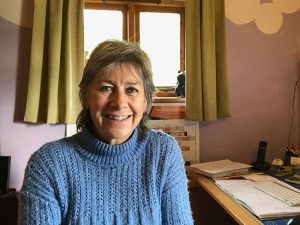
Five selfie images, taken with both phone and pro cameras.

Pro camera v phone camera – what’s the difference?

Why does it take me so many attempts to get a good selfie? Pro camera v phone camera – what’s the difference?

Selfie, after selfie, after selfie… you take several, to finally get one you think will be just about ok – sound familiar? Have you ever considered the different results between a pro camera and a phone camera?

It’s an observation I hear frequently.

‘But we all have the cameras on our phones so I can do my own headshots can’t I?’…

Now before you switch off, I’m NOT going to get technical, although the differences are all technical. I’m going to show you comparisons and why it makes a difference to the way you view your own image.

As always, I often refer to related content in a previous blog, take a read, it may help: Using Phone cameras and filters.

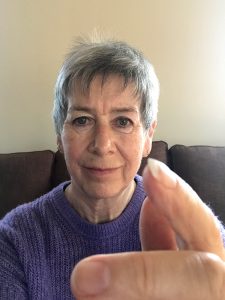
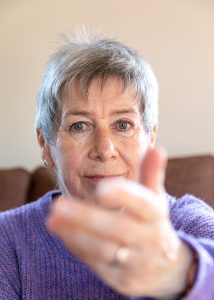
The following two images were taken in the same spot, same angle, minutes apart, very similar ratio crop, no retouching:

The first was taken on an phone camera – The second taken on my professional camera:

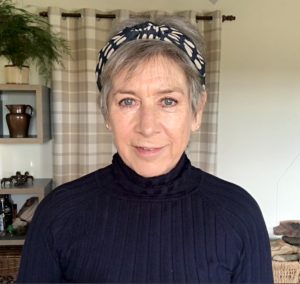
Selfie image, full on to the camera, no re-touching.

Selfie image, taken on a phone, illustrating distortion.

Selfie image, taken on a professional camera, no-retouching.

A selfie image, taken with a professional DSLR camera.


Firstly, let me point out the distortion on my facial features, which is pretty obvious as you can see. The image taken on my pro camera is far more representative of who I am and what I look like.

I promised I wouldn’t get technical … but these are all technical issues and if you want to know more on that, please get in touch.

Secondly, the colour representation. In fairness to our phone cameras, (especially the newer models) they can do a pretty good job. However, that’s often when there is plenty of natural daylight. The jumper colour is really accurate with my pro camera.

Thirdly, the light level. Although there was reasonably good ambient light, I didn’t have a good source of natural daylight directly on my face. You can see the difference in how the two cameras managed it.

The following two images were again taken in the same spot, same angle, minutes apart, very similar ratio crop, no retouching:

The first was taken on an iPhone – The second taken on my professional camera:

Selfie image, with part of my hand in view.

This is a second illustration of phone camera distortion.

Selfie taken on a professional camera with part of my hand visible in front.

Selfie on a professional DSLR camera comparison.


This illustrates the distortion again. While I was holding my hand the same distance from the lens, my fingers are clearly much larger in the first image. Again, the colour representation and light levels differ too.

The following two images are a little older, both taken with a phone camera, a little further away from the lens.

You can still see some distortion in these, but as they are further away from the camera, it’s less obvious.

Selfie taken at arms length.

Selfie taken at arms length with slightly less distortion.

Selfie taken further away.

This selfie taken at arms length illustrates slightly less distortion.

What’s this comparison got to do with how we see ourselves?

I may have mentioned this before, but it’s worth covering again. One of the first things that can cause us to question or dislike an image of ourselves is ‘unfamiliarity’. We are used to seeing ourselves in the mirror. However, when we see a  photograph, it’s the other way round, which is how everyone else sees us. We may all think our faces are symmetrical, but we’re not. So slight differences on each side of our face are reversed. Add to this additional unflattering distortion as shown above, potential for poor lighting, wrong angle, and it’s no wonder people keep trying to take selfies unsuccessfully.

Pro camera v phone camera – what’s the difference?

In conclusion, you can clearly see quite a difference between phone camera images and those taken on a professional DSLR. So working with a professional photographer, is not just about their knowledge of how to get the best from you. It’s the type of camera they are using too.

Both the following help sessions are good starters for you to understand more about the images you have and why you might not be so keen on them, especially if they were taken on a phone camera:

https://loveyourimage.co.uk/review-your-image/

https://loveyourimage.co.uk/explore-your-image/

Did you know Love Your Image is on LinkedIn?

*****************************************