Tag Archives: photography

Three images, family group, single female headshot and single female sitting on grass.

What does your wellbeing look like to you?

What does your wellbeing look like to you?

So I’ll start by asking you “What does your wellbeing look like to you?”  and we’ll come back to this question.

For many, wellbeing is associated to how we feel. When life is good and running smoothly we can feel great. When life throws us challenges to navigate through a period of time, we can feel tired, drained and stressed.

Your wellbeing is yours to define and look after and is individual to everyone.

High stress levels will mean our cortisol and stress hormones rise. If we live with high stress levels for any length of time, it can ultimately impact on our physical and mental wellbeing. When life challenges us like this, it can also lead to a deterioration in how we feel and see ourselves.

Back to that initial question ‘What does your wellbeing look like to you?’ As a photographer, I frequently observe (and hear) a connection between how people see themselves in photographs and how they feel about themselves in general. Especially for those who don’t like getting in front of a camera.

This is unique to everyone – what may affect some in a negative way, won’t even register with others. There is no right or wrong in either.

So how can we maintain a happy balanced life that we enjoy and thrive in? One in which we feel good about who we are and what we see.

We all have ‘stuff’ going on in our lives to manage and navigate. The life skills we have learned and developed, enable us to go to work, run a business, raise a family. All these things can impact our outlook and wellbeing.

Is a good awareness of ourselves our key anchor point to maintaining some life equilibrium and part of our skillset to coping with challenging times?

Are you a person who spends time thinking, ‘when I lose (or gain) weight’, when I have XYZ treatment’, ‘when I get a bit fitter’ … I’ll feel better about myself. Do you think it’s actually important to like and love yourself as you are now, whatever size, shape, colour or package you come in?

Another big thing that can shape our views of self, is a learning for many of – ‘act as if everything is ok’, don’t talk about that problem’, ‘don’t make a fuss’, ‘this was all your fault’. We stay quiet and hope it will go away. But this can hide a plethora of problems that we end up living with.

It can be a big challenge and change for many of us to openly admit not all is well and find the courage to seek help and support.

Where can we find the answers to maintaining a healthy sense of wellbeing?

You can get help and support with so many things these days. Being a great subscriber in a more holistic approach to looking after myself, can vouch for the benefits of many therapies. To name a few, such as acupuncture, meditation, yoga, NRT, physiotherapy, hypnotherapy, alongside our more traditional medicines via GP’s and hospitals.

During early lockdown I spent many hours studying the work of Dr Bruce Lipton. He is an American stem cell biologist and has found the scientific connection and proof that our genes do not control our biology. Rather your mind is your key to the control you have over yourself. Well why wouldn’t it, after all it is all you. Your body isn’t some separate entity you have to live with. So this made perfect sense to me.

To return to the question ‘What does your wellbeing look like to you?’ How you see yourself and how you refer to yourself is very important. As a photographer, I see the absolute best in everyone and through my work with ‘Love Your Image’, help others to see it in themselves.

Truly loving ourselves, is one of the most powerful things we can do and greatly benefits our wellbeing.


You can find out more about Love Your Image on the website here

There are available help session within Love Your Image. You can find more information here

*******************************************

A lady receiving advise from a photographer and the finished results

Comfort Zones, confidence and control – what comes first?

What comes first to make a change or feel we are moving forward in our lives?

Comfort zones, confidence and control – what comes first? People who dislike getting in front of a camera and being photographed, often say they can’t imagine what it might be like to feel differently. For many it had’t even occurred to them this was something they could change. The turning points could be:

  • When it starts to impact something important to you.
  • When you realise it’s holding you back.
  • When you realise you don’t want to feel like that anymore.


So what happens first?

  • Do we just shut our eyes and step into the unknown, because what have we got to lose?
  • Do we need to find an element of confidence before we can step out of our comfort zone?
  • Do we need to have some control to take that step, in order for our confidence to grow?

Well yes, anyone of these things may be right for different people.


People feel out of control.

I’ve been hearing an increasing number of comments around the area of ‘control’ relating to getting in front of a camera. People feel out of control, or they have no control over the situation. This seems to be growing with our society’s use of phone cameras. More than that, an increased assumption in people that they can capture anybody anywhere without considering how individuals feel. Indeed, at a business event/networking meeting, you come to expect it will happen at some point.

  • You could be at a private gathering where you don’t necessarily know everyone.
  • You may not know where these images are going to end up.
  • You may feel even more uncomfortable asking to exclude yourself from the images.

You could feel trapped between a rock and a hard place.


Perhaps you have more control than you think.

So considering our subject of ‘comfort zones, confidence and control – what comes first’, perhaps you have more control than you think? You should always feel you are able to politely exclude yourself from images, without fear of judgement or complaint. Learning to deal with responses such as “oh you’ll be fine” or “well I want to capture everyone here”, is both achievable and empowering.

Learning how to position yourself and importantly, what to focus on when in such a situation will also put you much more at ease.

If working with a professional, it is they who should help you feel in control. This will likely make you feel happier and more at ease, achieving a positive effect on the results.


I want to change how I feel.

If like me, you may be a bit stubborn and prefer to discover everything for yourself! However, learning interesting facts and information that provide me with lightbulb moments for change or improvement – is empowering! It’s something I’ve achieved in myself and observed in others.

When you’ve made a decision for change, non judgemental guidance can make so much difference. Not to do the challenge for you – but to provide step by step insights and help you see a different perspective. Provide encouragement and belief in yourself. Your journey is not their journey, but they will be there to help you achieve your goals.

Interestingly, some of the things mentioned in this blog, I did mention in an earlier one, written and published two years ago and you could find a helpful read – I had to step outside my comfort zone

So you receive more blogs like these, make sure you sign up to the mailing list on – Love Your Image

Secondly, you can sign up for a free consultation and review what your options could be – Review Your Image

**********************************

All systems are moving forward with the planned online courses – 🙂 – news out soon.

Don’t forget to visit our You Tube channel to find useful tips and recorded conversations Love Your Image You Tube channel.

Image of two great conversations and a smiling lady.

What’s really going on in a photograph – Part 2

Have you ever had your photograph de-constructed?


Well why would you… unless you don’t like what you see?


What’s really going on in a photograph? Last year I wrote a blog on this subject to deconstruct what brings a photograph together. This broke down the various elements to explain why we don’t see beyond what’s directly in front of us. This is particularly relevant if you don’t like getting in front of a camera and think a poor result is all your fault.

If you haven’t already read it, I’m sharing a link to that blog again:

What’s really going on in a photograph?


It’s all about a good conversation.


Recent conversations brought last years observations to mind and worthy of adding another angle on the subject (pun intended). An image is essentially the result of a conversation, or communication between two parties. The success of the photo/s depends on the quality of that connection. Both sides of the conversation would like a good outcome that shows in the results, for their own agendas. But they both have to give the other something to achieve that.

Let’s assume for a moment that the technical side is all good and ok when capturing the image.

However, there still needs a good rapport going in order to get the engagement and guarantee great results. As in a normal conversation, if one always dominates and doesn’t consider or understand the others needs or point of view then the connection may not achieve the results you’d hope for.


Equate this to taking a photograph:


Person being photographed:

  • Do you feel comfortable with the photographer?
  • Do they talk you through the process and put you at ease?
  • Do they give you confidence, that enables you to trust you’ll get good results?
  • Do you feel out of control?

Photographer:

  • How closely do you observe your subject?
  • Do you know what you’re looking for and how to get it?
  • Do you start a conversation and keep it going?
  • Are you able to recognise if your subject is feeling anxious?


Let’s add another consideration…


This is not a professional shoot and someone has their phone camera out. This is traditionally where any conversation ends. There is also unlikely to be any guidance on the assumption you know how to stand/sit/smile. The photographer is intent on looking at their phone and before you know it… the photograph is taken. You are left with no idea how that image looks and perhaps a feeling of apprehension of its result. The photographer doesn’t see this through the same eyes as you.

If you express your feelings of “do we have to do this?” – it can be met with “you’ll be fine – don’t worry about it”.

So, you can now understand a bit more of what really goes on in a photograph, whether you are being captured, or, you are the one taking the photograph. If you want great results, start with great engagement with those you have in your camera site 🙂

******************************

The YouTube channel continues to have things added to it. There will be another series of top tips soon, leading up to the Christmas period to help you when the cameras are out – Love Your Image on You Tube

********************************************

Three different photographs of women and one of a couple.

Photoshop and airbrushing

You can change anything in an image now using Photoshop and airbrushing.

This is a software program I use nearly everyday – it enables me to shoot in Camera Raw and open the images in Photoshop to edit … WAIT … that’s already too technical and if you haven’t switched of, let me explain something that will make a lot more sense to you.

I’m sure most of you have heard of the term ‘photoshopped’, it’s even in the dictionary! In brief it is image editing software. It’s the industry standard widely used by Photographers, Videographers, Graphic Designers and many other creatives. It is huge and very versatile. You can use it for years and still find you only access a small part.

As a professional photographer, I need to get as much right in camera as possible rather than spending hours in Photoshop afterwards. However, generally speaking, there are situations where I need to be able to correct an image because conditions were not quite right at the time of taking the image. Photoshop enables me to do this – i.e. adjust the light levels, colour balance, improve the crop. Most of these are only small adjustments, and is part of the processing.

However, most of you who know me as a photographer of people and that is the focus in this blog, so …

Are you aware of just how much can be changed and its effect on how we see ourselves?

To illustrate, the two following images of myself, say it all really. I would add however, that while the two examples are a bit extreme (in my opinion), a lot of media airbrushing that happens, is barely noticeable and it’s kept very realistic. Leading us to truly believe that models, celebrities and those frequently in printed media do look just like that.

A self portrait without airbrushing or being photoshopped

Before editing …


An airbrushed self portrait photograph.

After editing …


If I was happy and liked the results of the second one, what I’ve really said is …

“I don’t like how I look in the first image”

or

“I’m not good enough without some re-touching”

But if you hadn’t met me, what would you think if I used the second image as a headshot!

If you are in business and out and about networking, what does your headshot say about you? This is what people may have seen before they meet you for real.

Where has all this come from???

Before editing software was available, photographers had to get it right in camera, or have a very fiddly task of correcting something on a film photograph. With the rise of digital cameras has come the development of editing software. Don’t get me wrong the software editing tool is hugely useful for all sorts of things. My concern here is what it can do to our self esteem.

Here are a few examples where I would and have agreed to correct:

  • An engagement shoot and there was a very sunburnt nose on display.
  • Someone had a tooth fall out and the person was having it replaced with an implant.
  • A black eye!

You never know what might happen just before a booked shoot.

However, technology develops at a great pace.

Our younger generation especially, don’t know an age when photo re-touching at the touch of a few buttons didn’t exist.

The following video is by Dove and has been in circulation for about a year now.

Why aren’t we telling all young girls that they are beautiful just as they are???


Well hats off to Kate Winslet – in this this particular video as she removes her makeup, but the message is the same, whether it’s makeup, or digital editing.

BUT Christmas is round the corner, so let’s finish this blog with some positive tips.

If you are heading off to Christmas and New Year parties, or catching up with friends and family, the cameras will be out in abundance!

If you’ve been following my posts on social media, or have signed up to receive the top-tips, yes all these things apply. However, we are talking about situations where there will be a lot more spontaneous moments. The tip on lighting still applies, but there will likely not be an opportunity to do anything about it… you may be amongst dance floor lights, Christmas lights, and spotlights!

  • Tip 1 – Don’t stand and wait to be positioned. Whether on your own or in a group, it’s unlikely to happen! Position yourself at an angle that is comfortable for you and watch the person with the camera at all times!
  • Tip 2 – Be yourself, and in the moment. Not all successful photographs have to be looking to camera.
  • Tip 3 – Get the person in charge of their camera, to give you some idea of when they are taking the photograph! You can do this too when capturing others.
  • Tip 4 – Don’t let others make you feel awkward or bad if you politely decline to be in a photograph. They are not in your shoes or understand how you feel.
  • Tip 5 – Typical example of what can happen when people are just not ready … and seconds later when they are. Give people a chance to be at ease and smiling.
Image illustrating two photographs taken seconds apart.

Let people know when the shot is being taken!

These tips will be posted on my social media platforms each Friday throughout December, with an image to illustrate. However you get to have the tips early :).

I hope there will be another blog before the end of the year, but in the meantime, do have a happy and enjoyable festive period, wherever you are and whoever you share it with. 

PS – don’t forget Love Your Image has a You Tube channel

PPS – If you haven’t already done so, do sign up to the mailing list and always be notified when there is new content to devour!

**********************************

Five different photographs of a man standing

Body parts in photographs!

I could have made this article sound like an autopsy, with a heading on ‘body parts in photographs’!


To some of us, a particular part of our anatomy
can be a bit like ‘the elephant in the room’. When having a camera pointed at us, or investing in a photoshoot, it’s the main thing we focus on in a negative way.

It can be one thing, or several elements you fixate on and dislike.

Over the years I’ve heard and observed a wide variety of areas that get the ‘thumbs down’:

  • “No profile shots, I’m conscious of my nose”
  • “I have to hide my ears with my hair”
  • “I don’t like my teeth showing”
  • “What can you do with my lazy eye?”
  • “My arms are a bit fat”
  • “I want to lose some weight before I come and see you”
  • “Can you lose my chins?”
  • “My hair… (yes even this)”
  • “Can you photoshop my lines out?”
  • “I smile like a cheshire cat!”
  • “I have a scar…”

… the list is long and varied – but I get it, I know the things that I thought were my problem areas many years ago.

When people ask if I can ‘photoshop’ them in an image, my answer is this:


“I can, but then all I’m doing is agreeing that you’re not good enough without correction”
. (I will be writing more on photoshopping in another blog). Please do remember, this is solely your opinion of yourself.

Without exception, you are great the way you are. But, I DO understand things that challenge you and am here to help you start that process of viewing yourself differently.

Some people fear being judged, or have indeed had this happen. It could have been from many years ago… it’s not pleasant.

TO EVERYONE

All who know you, matter to you and love you, will accept you as you are.

TO EVERYONE

Judgement says everything about the person who is dishing it out and not about you (Judgement is also the subject of another blog).

You may begin to observe that I refer to other blogs that have been written and future blog subjects that will be covered. These will always be relevant to what I’m getting across in the current article.

So let’s keep this relevant to the matter in hand. To begin the process that will help you, rather than removing an item, I work at taking away the focus from that element. This can help you have a completely different view on it. Yes it still needs to be part of an overall pleasing image in all other aspects.

It’s achieved by the lighting used, the angles used and the right communication with the person being photographed to capture your spontaneous expressions.

Let me give you some examples:


Where someones teeth showing is their challenge
– to work with half smiles if often successful. To allow someone to keep their mouth tightly closed, just causes tension around the mouth and jaw.

Chins is a common one – one trick is to get someone to lean towards the camera a little. It does’t take much… too much lean and it will look odd. Very often if someone suddenly has a fit of laughter, it can cause them to pull their chin in… giving themselves an extra chin which they don’t normally have.

Let’s say someones right eye doesn’t open quite as much as the other. I don’t like using the term ‘lazy’ as this makes it sound quite derogatory. Turn the right side of the face slightly towards the camera, have the camera a little above the subject, causing them to naturally look up towards the lens. This can often open that eye a little more than normal.

Facial lines – by flooding the face with light, without removing all shadow. Shade context gives your face shape and the unique expression that is you. This can either be using the right studio lighting, or finding the right natural light source. This can also apply to scars.

I can’t stress enough that adjustments in position, angle, height, light, really don’t need to be too much to achieve effective results. As already mentioned, the success is also in your spontaneous expression achieved by the communication with your photographer.

This blog brings a little insight to part of the process of helping you accept the tremendous individual that you already are.

If you haven’t already done so, do sign up to the mailing list and make sure you receive all blogs and videos as they are published – Sign up to the newsletter

Don’t forget there is also a You Tube channel, with a growing number of ‘recorded conversation’ with people who are experts in their field and their subject has a close connection with the concept of Love Your Image

woman holding her hands in front of her face

Photographer Responsibility … part 1

How do you feel when people point a phone camera in your direction and “snap”… take your photograph without asking?

Nowadays some people feel they have the right to photograph you when and where they please without a second thought to ask if it’s ok? 

This is something individuals in the spotlight, celebrities and the like have had to endure for years. But you could say that comes with the territory of being in that position. Journalist photographers working for newspapers and magazines all want to catch your every public move – its news! Although many law suits have been issued when the paparazzi take it too far and attempt (often successfully) to catch people in the privacy of their home or on vacation. It’s a subject of regular controversy.

Let’s bring it a bit closer to home – 

Perhaps you’re a member of a group who meet for whatever reason of mutual interest and someone insists on recording the gathering… every single time! Despite your protestations, you’ll likely get the reply “oh don’t worry about it, you’ll be fine” and they carry on. It makes you feel highly uncomfortable! You might consider leaving the group – so what are your choices? You could just put your hand up to cover your face, (as in the image) or turn away (I’ve done that before now!). But that’s pretty drastic and could create social barriers within the group. You can try talking to the person and explain how you feel. You hope they are a reasonable and understanding individual who will allow you to stand aside and be out of shot. But that in itself could make you feel even more at odds, as then we could feel we were being the ‘difficult one’.

There is currently no law in the UK preventing this if you are out in public spaces. 

So if you find yourself being one of those photographers and someone objects, stop and consider for a moment how it is for them. Accept that they find it a particular challenge and your actions are making them feel very uncomfortable. If you can do this without question or judgement, even better, it will be appreciated.

There’s more to be discussed on the subject of ‘Photographer Responsibility’ which will come out in a future blog.

In the meantime, do sign up to the mailing list for Love Your Image and stay up to date with new information and blogs.

‘Home Grown’ diary project – the photography update …

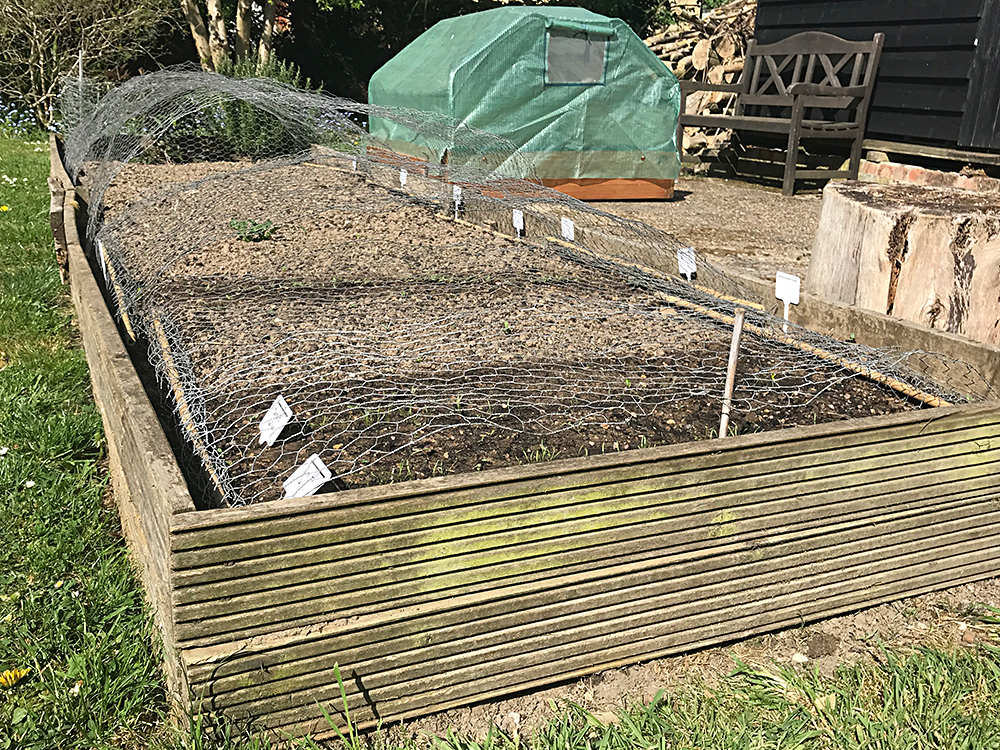
Recording Veggie McVeg patch project on my iPhone…

Sometimes the best camera to use, is the one you have to hand…

ISO, shutter speed, aperture, exposure settings, focal length, focusing… I could go on and to many people this is like a foreign language and they glaze over and switch off… so my observations and comments in this blog will be kept technically easy peasy. My current phone is fairly middle of the road and not one of your top of the range models. By the way, you don’t need high end editing software. Look for the editing capabilities that your phone camera will have, or, look for some freely available editing apps out there that you can use – these will help with simple cropping, rotation, light adjustments, contrast, colours and the like.

As great as it is to have my pro camera (the big C) to use, I also get a lot of fun from using the one on my phone and this was the ideal choice to record my ‘Home Grown’ garden project. Why, well outside (even on a dull day) there is plenty of light to capture good shots. Also, I spent a lot of time (certainly in the early days) preparing, planting, thinning, potting out, keeping it all protected… and lots of watering… and I didn’t really want to spend equally long amounts of time taking photographs. It was fun, but functional to tell the story with visuals, in (hopefully) an interesting way.

First thing was to make sure my cameras grid lines were switched on… oh and that my lens was clean – generally speaking throughout the images, I’ve tried to keep horizontal lines, not perfect, but as straight as possible where that was the intention. Sometimes though, the best illustration is to get a good perspective angle. Also, caution here, depending on how close you have your phone to your subject, you will see some distortion in relative distance and size.

vegetables, fruit, grow your own, new skills,
A perspective angle, to show the area in the early days…
vegetables, home grown, growing
Not quite the same angle, but similar, to show a more recent state of the main veg patch.

Then there is the angle you take the image from… phone cameras are very sensitive to small variations in tilt – either left to right, or top to bottom… or both – and something you can be quite unaware of. Also make sure you know where your lens is pointing from… is it top right/left, or would you get a better angle to turn it 180 degrees so the lens is bottom right/left? Generally, I needed to take a shot just above and looking down at a slight angle, to illustrate what was in a particular pot or tub, but not too high that it lost perspective. Probably the most challenging thing to get the angle right, was the lettuce house, because of the cloche over the top, which took two people to lift off and many a moment spent leaning in as far as I could get without falling over!!

tomatoes, home grown, vegetables,
Quite a good example, of the angle used to illustrate the small plants, without all their leaves merging into one another.

I had a few challenges getting either close enough or the right angle, not just for the ‘viewability’ of a shot, but if the sun was out that day and reflecting straight onto my viewing screen… I couldn’t see a thing. Talking of sunlight, this made a difference to the time of day I captured things and the direction I took the shot from. However, given that most days it would be first thing, or late afternoon I’d be out checking on the garden, that was the best time to be taking photographs. But any time during the day at weekends, when many of the longer tasks were completed, the light is more of a challenge, especially when part of the garden was in sun and part in shade – so bear this in mind. The evenness of your light will make a difference to the success of your shot, unless you are intentionally going for a more artistic contrast effect.

lettuce, salad leaves, grow your own,
Just got away with some mottled sunlight and shade, and the angled perspective helped.
This flower taken in very full and strong sunlight just worked in its beauty and detail… they don’t stay open for long!

What I enjoyed the most were the detail shots… where I got in really close to the subject to illustrate a point I was making. This often involved delving under a quantity of foliage to get an interesting angle. Getting to know your cameras focusing distance is important here, to make sure your image is sharp. You can also achieve an effective ‘depth of field’ when getting up close to your subject, which will help highlight what you’re talking about… if you get your focus point correct.

tomato flowers, vegetables, home grown
I got right under this tomato flower to capture its detail, which worked with the dark background of the shed behind.
bees, pollenation, wildlife
I was able to get right onto the bees level and get him sharp as the flower conveniently sloped away to the front.

I hope the above has been of interest or useful and from now on, I’m going to spread out the recording of the fruit and veg growing, as time is needed on more work related projects. However, I still hope to do a couple more updates, as there are still things to learn, harvest and sow 🙂

For next time, among other things, baby tomatoes have appeared 🙂 …

Do enjoy your summer 🙂

When children are a bit quiet… what’s really going on?

As a child and in the middle of a brood of five, we had to learn to entertain ourselves much of the time. We were lucky to live in a rambling old farmhouse that my father renovated and had our own ‘playroom’, where nothing had to be tidy… as long as there was a pathway through the middle to get to some of it!

It’s often assumed that when children are a bit too quiet, someone is up to no good! But from a child’s point of view, it’s probably quite different. Reliving elements of a much younger person, I can recall things that brought me much amusement … just because you could. Out walking, you had to jump into puddles… on the beach, digging holes in the sand trying to reach Australia. Collecting things and keeping secrets. Spending hours in the playroom making stables for my toy horses out of shoe boxes (we were allowed scissors in those days). Re-painting my bike frame with ‘tiger stripes’ (???). Creating cardboard guitars, so we (my brothers and sisters) could be a pretend band… and numerous board games.

All this mischief happened and I’m sure along the way we were told off for few things that went ‘too far’… someone got a bit rough and someone ended up crying. 

But I also remember it being a very creative time, lost in my own world of doing something, or, playing with my siblings and always enjoyed Christmas with them.

Relate that to a business world

I’ve been rather quiet lately, with no time to post as much on social media or get newsletters and blogs out. I could say ‘I’ve just been busy’, which is true, however as well as much photography, this has included several other projects, both on a personal and business front, and new work to arrange for 2020… 

My ‘photography mischief’ has included, weddings, families, horses, personal branding, headshots, modelling knitwear, food (a new one!) and Christmas parties.

In addition to photography, I’ve stepped up my involvement with the FSB, hosting their Connect networking meeting in Bury and also becoming an Area Lead for Norfolk and Suffolk, taking me out and about across both counties.

So I want to take this opportunity to thank you for your support this year and wish you and yours a very happy Christmas and festive break. May your 2020 will be as creative and fruitful as I’m ‘quietly’ planning mine to be.

photography, Christmas, 2019, children, creative,

When children are quiet… what’s really going on?

Do testimonials work… do you read them or skip over??

When you’ve completed a successful shoot and your client is really pleased… should you always remember to ask  for a review or testimonial? This is usually the bit I forget!! … although some clients spontaneously provide one anyway 🙂 

I’m told google likes them, and sources like ‘Trust Pilot’ wouldn’t exist if people didn’t look for them – LInkedIn and Facebook have a business page ‘review’ feature, so I guess the answer is that you should. It feels like ‘self praise’ and blowing your own trumpet, but nowadays it’s much more about showing you are a credible and trustworthy business and who better to authenticate your services than happy customers.

So, do you read reviews and testimonials? Well, yes if I’m purchasing items from a source that I don’t know personally, they are very helpful. Or, researching the best item to buy on say, camera equipment. Does this apply to services too, especially those that are hugely personal, such as photography? In addition to ‘reviews’ and ‘testimonials’ we should add ‘recommendations’, as these are frequently asked for on places like Facebook. I ask this, because most of my work comes via face to face networking and getting to know people, who in turn use and recommend my services.

Perhaps reviews, in addition to a solid portfolio, are mainly part of a credible and true presence online, including all the various social media platforms … will you read any further 🙂 ??

” I can not begin to express the delight I felt when I saw our photos however the outstanding service started months before we got them!
For my 50th I wanted a picture of my family so hubby duly got a voucher from Penny and then handed over to me! Oh my what a pain pinning 4 sets of families and diaries to one Saturday. Penny was supportive and patient, no pressure just gentle reassurance that we would get there. So we got a date and we all turned up at the most beautiful house and gardens… chaos ensued with sorting two 3 year olds, two under 12 months and one teenager who needed to be serious.
Penny had taken the time to ask questions before hand so she knew all the likes and dislikes and all the names, plus Terry supported Penny and entertained the children and took additional pictures.

Thank you thank you thank you 😊

If you are looking for someone who cares about the service they give and the shots they take then please use Penny – you will not be disappointed

Venitia Billings “

Canvas wrap, image, family photo,

All ready for delivery..

All ready for delivery…

#portrait #suffolk #family #together Family gathering

Quick tips – how to be in front of the camera:

If you are one of those people who feel mighty uncomfortable in front of a lens and you’ve not had the opportunity to work with a professional, I wanted to share a few ‘rules of thumb’ and tips to help, that you can take away and actively put into practice.

First of all, I firmly believe that the responsibility lies with the photographer to capture a good shot of someone – not that of the people being photographed. Everyone without exception can take a good photograph, no arguments – and if you are working with a professional, they should have the knowledge to guide you all the way through it.

There are exceptions to the rules and as a professional photographer, I work with the individual and capture what is right for them, as we are all different.

However in a ‘non’ professional situation, you have more control that you may imagine, because it’s unlikely there will be any guidance of where and how to be, whether you are seated, standing, on your own, or in a group. It’s also very doubtful you will be given an indication when the image is about to be taken.

When standing full on, or square to the camera, this is your widest angle and gives little opportunity to show your personality. If you stand sideways onto the camera, it’s going to look quite awkward turning your head so far to look at the camera and also shows all your outlines. 45 degrees towards the camera is your best angle and streamlines everything.

2 – Stand comfortably, either equal weight on each leg, or, place your weight on your back leg and allow your other leg to casually point forward. Hands can either be gently clasped in front of you, or behind.

3 – Angles to the camera are good – we’ve already mentioned in Tip1, but SMALL tilts of the head also help. The camera is at a more flattering angle if a little above you and less flattering if below you.

4 – All the above also applies to being seated in front of the camera.

5 – If you find yourself in a group, say at a party, wedding or family gathering, apply the above tips, focus on the fun of the event, allow a smile to come to your face and resist the urge to chatter. Watch the camera and wait until they have taken the image and put the camera away.